A recent study involving 60 participants has found that hunger significantly alters how the brain processes food-related thoughts, suggesting that cravings are driven by biological signals rather than mere willpower. The research indicates that when hungry, individuals experienc…
This article explores the influence of GLP-1 receptor agonists on self-control and weight management, challenging traditional views that attribute weight issues solely to individu…
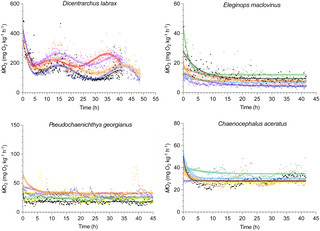
A recent study investigates the loss of core circadian clock genes in perciform fishes, revealing significant genetic changes associated with their adaptation to extreme environme…
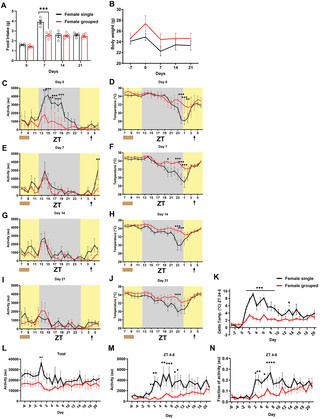
A recent study investigates how social housing affects food anticipatory activity (FAA) and thermoregulation in mice. Findings indicate that group housing significantly suppresses…
This article examines why salty foods are particularly appealing when we are by the sea. It explores the interplay of physiological factors, such as sweat and sodium loss, alongsi…
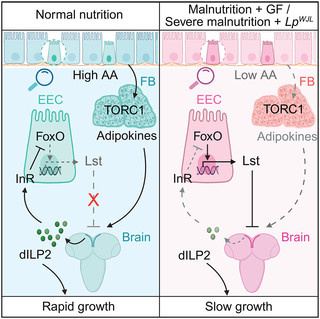
A recent study highlights the critical role of Limostatin, a peptide hormone, in regulating developmental pace in Drosophila larvae in response to nutrient availability. The resea…
The Valentino Spring 2027 collection has introduced a radically impractical requirement for all women: a mandatory selection of twelve distinct fabric swatches to be carried at al…

 Breathing.Food