Study Reveals Limostatin's Role in Nutrient-Sensitive Developmental Adaptation
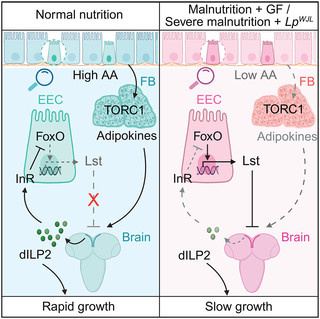
In a recent study published in PLOS Biology, researchers have uncovered a significant mechanism by which animals can adapt their developmental pace in response to nutrient availability, specifically focusing on the peptide hormone Limostatin (Lst) in Drosophila larvae. This phenomenon, known as developmental plasticity, is crucial for survival in fluctuating environments where nutrient levels can vary. The study reveals that Limostatin, produced by specific enteroendocrine cells in the larval midgut, plays a vital role in slowing down developmental progression when amino acid availability is low. This response is part of a complex endocrine circuit that integrates nutritional signals to ensure the larvae can survive periods of nutrient scarcity.
The research indicates that when amino acid levels drop, Limostatin is secreted, which then inhibits the release of dIlp2, a major insulin-like peptide that promotes growth. This inhibition creates a feedback loop that effectively slows developmental processes, allowing the larvae to conserve energy and resources during times of nutritional stress. The findings position the larval gut as a critical endocrine organ that senses nutrient levels and adjusts developmental timing accordingly.
The study also highlights the interaction between dietary components and the microbiome, suggesting that the gut microbiota can influence developmental responses to nutrition. By comparing germ-free larvae to those associated with specific gut bacteria, the researchers found that the presence of beneficial microbes can buffer against the impacts of malnutrition, further emphasizing the intricate relationship between diet, gut health, and developmental biology.
Overall, this research expands our understanding of how hormonal signals coordinate developmental adaptations in response to environmental cues, suggesting that Limostatin may represent a conserved mechanism across species for regulating growth and maturation in challenging nutritional contexts. As such, it opens new avenues for exploring how metabolic health can be influenced by dietary and microbial factors, potentially informing future studies on nutrition and development.














