A recent review published in The Innovation Nutrition highlights the importance of food quality in promoting healthy aging, suggesting it may offer an alternative to calorie-restriction strategies. The review analyzed over 30 studies and identified key factors such as carbohydra…
A recent study published in Nature Communications has identified ten dietary patterns that are associated with slower biological aging. Conducted by researchers from the German Ce…
A recent study highlights the importance of diet quality in influencing metabolic aging. By analyzing data from over 15,000 adults, researchers found that better dietary habits ar…
A recent study highlights that moderate calorie restriction can improve diet quality and reduce inflammation without compromising nutritional adequacy. Participants who reduced th…
A recent study published in the Journal of Oral Microbiology reveals that added sugar consumption significantly reduces the diversity of bacteria in the mouth. Analyzing data from…
A recent study from Virginia Tech has found that ultra-processed foods can lead to a significantly higher insulin response compared to less processed meals, even when both meals c…
Recent research involving 1,769 older adults reveals connections between dietary patterns and various health markers. The study highlights how certain diets may influence metaboli…
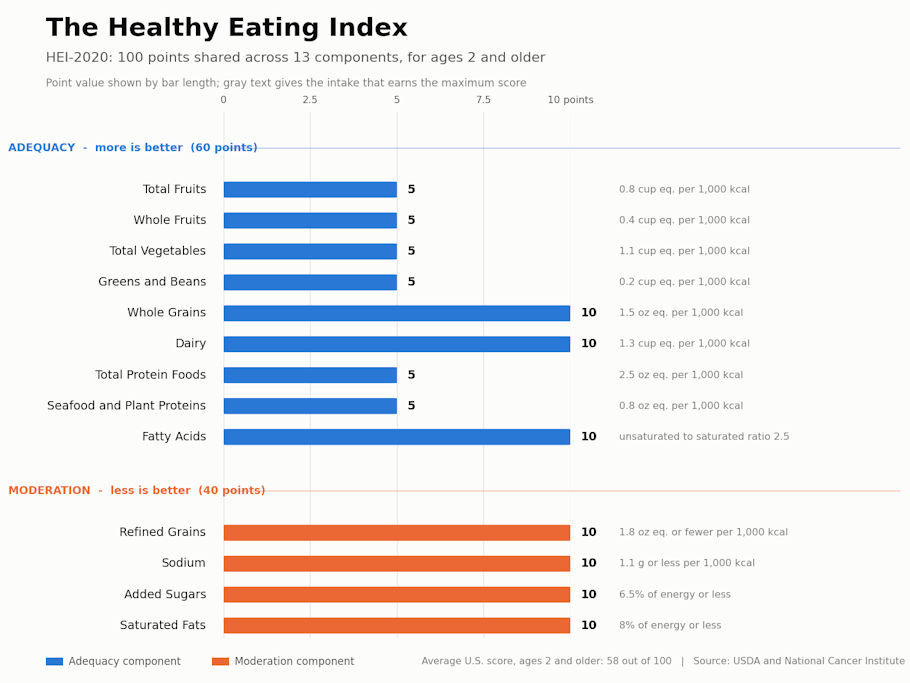
This article delves into the Healthy Eating Index (HEI), a scoring system that evaluates how closely diets align with the Dietary Guidelines for Americans. It highlights the dispa…
A comprehensive review of dietary patterns reveals that adherence to healthy eating habits is associated with longer lifespans and lower risks of chronic diseases. Key studies hig…
A recent study published in Frontiers in Nutrition indicates that U.S. adults with higher diet quality scores are 39% less likely to die from colorectal cancer compared to those w…
Fatty liver disease, also known as metabolic dysfunction-associated steatotic liver disease (MASLD), is increasingly prevalent, affecting an estimated 1.3 billion people globally…

 Breathing.Food