Exploring the Healthy Eating Index and Its Impact on Diet Quality for Disabled Individuals
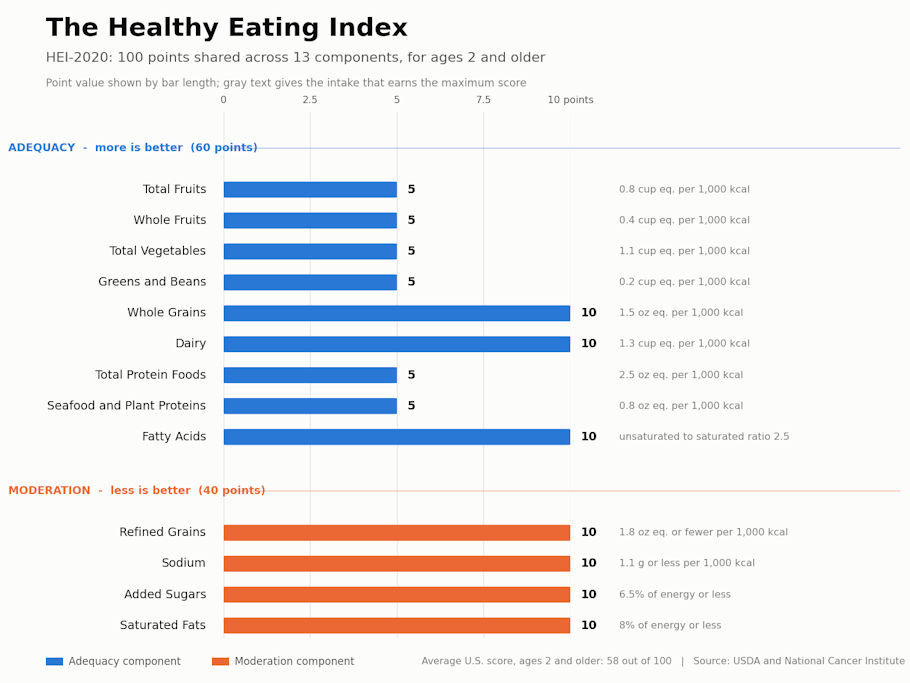
The Healthy Eating Index (HEI) is a scoring system ranging from 0 to 100, developed by the U.S. Department of Agriculture and maintained in collaboration with the National Cancer Institute. It measures how well a set of foods aligns with the Dietary Guidelines for Americans. The HEI breaks down diet quality into thirteen components, with nine focusing on adequacy—encouraging higher consumption of certain food groups—and four emphasizing moderation—encouraging lower intake of others. The average HEI score for Americans aged two and older is 58, but this figure drops to around 50 for adults with physical functioning limitations, indicating a significant gap that is often attributed to factors such as income, transportation, and kitchen accessibility rather than personal choice.
The HEI serves as a useful tool for assessing diet quality without considering the quantity of food consumed. It provides a standardized measure that can be applied across various contexts, from individual meals to national dietary patterns. The scoring system has evolved since its inception in the mid-1990s, with revisions reflecting changes in the Dietary Guidelines. The latest version, HEI-2020, maintains continuity with previous iterations, allowing for consistent comparisons over time.
Research indicates that higher HEI scores correlate with better physical functioning among older adults, suggesting that diet quality may influence mobility and daily living activities. However, it is crucial to note that while associations exist, causation cannot be firmly established due to the complexity of factors influencing diet and disability.
For individuals with disabilities, the HEI score often reflects broader systemic issues rather than individual dietary choices. Studies show that social isolation and difficulties accessing food can lead to lower scores in specific components, such as vegetables and seafood. Furthermore, individuals with intellectual disabilities may have different dietary patterns compared to their typically developing peers, highlighting the need for tailored approaches to nutrition.
The HEI's design, which scores dietary patterns based on a per-1,000-calorie basis, can obscure the realities of undernutrition, particularly for those with swallowing difficulties or other health conditions that limit food intake. Therefore, while the HEI provides valuable insights into dietary quality, it must be interpreted with caution, especially in populations facing unique challenges related to disability.
In summary, the Healthy Eating Index is a critical tool for understanding diet quality across different populations, including those with disabilities. It underscores the importance of considering the broader social and economic contexts that shape dietary habits and highlights the need for comprehensive strategies to improve nutrition for all individuals, particularly those facing barriers to healthy eating.