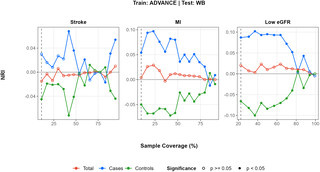
A recent study explores the use of Mondrian Cross-Conformal Prediction to improve the reliability of polygenic risk scores for predicting cardiovascular and renal complications in individuals with type 2 diabetes across various ancestries. The findings suggest that this method c…
A recent study involving nearly 500 cognitively healthy adults has found that lifestyle factors such as blood pressure and cholesterol are linked to vascular brain damage, a signi…
A recent study published in Alzheimer's & Dementia reveals a significant relationship between cardiac output and brain atrophy in individuals carrying the APOE4 gene, a known risk…
This article shares a personal account of an individual's journey after discovering their high genetic risk for Alzheimer's disease. Following the diagnosis of their father, the a…
A recent study reveals that individuals living in greener neighborhoods have a significantly lower risk of developing type 2 diabetes, particularly among those with a genetic pred…
Recent research indicates that consuming a higher-protein breakfast can lead to more stable blood sugar levels, especially for individuals carrying a genetic variant associated wi…
A recent study utilizing UK Biobank data has found that higher levels of physical activity, particularly vigorous exercise, are linked to a decreased risk of developing rheumatoid…
A recent study from the Buck Institute for Research on Aging reveals that the APOE2 gene may protect brain cells from DNA damage and cellular aging, potentially lowering the risk…
Researchers at the University of Hong Kong have developed CardiOmicScore, an AI-powered blood test that can predict serious cardiovascular diseases up to 15 years before symptoms…
Elena Castellanos, who has a rare genetic risk for Alzheimer's, made significant lifestyle changes to support her brain health after her father's diagnosis with the disease. She e…
 Breathing.Food