Enhancing Polygenic Risk Score Predictions for Complications in Type 2 Diabetes
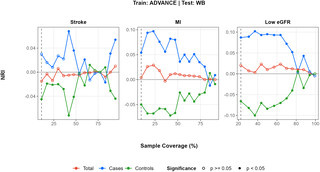
Type 2 diabetes is a significant global health issue, often leading to severe complications such as cardiovascular disease, stroke, and kidney failure. Identifying individuals at high risk for these complications is crucial for enhancing prevention and treatment strategies. Polygenic risk scores (PRS), which utilize genetic information to estimate disease risk, have been promising but are predominantly developed using data from individuals of European ancestry. This limitation often results in reduced predictive performance for non-European populations, raising concerns about health equity in genomic medicine. In this study, researchers aimed to evaluate whether incorporating an uncertainty-aware prediction method, specifically Mondrian Cross-Conformal Prediction (MCCP), could enhance the performance and reliability of PRS-based predictions for nephropathy, stroke, and myocardial infarction in a multi-ethnic cohort of individuals with type 2 diabetes. The study utilized data from both the ADVANCE trial and the UK Biobank, which included diverse ethnic groups. Two training frameworks were tested: one trained on individuals of European ancestry from the ADVANCE trial and another on the UK Biobank's White British participants. The MCCP method was found to provide predictions alongside explicit confidence levels, allowing for a pre-set error tolerance and flagging individuals for whom reliable predictions could not be made. Although MCCP did not significantly improve overall predictive performance compared to traditional logistic regression, it introduced valuable capabilities for uncertainty quantification, making it a potentially more equitable tool for clinical use. The study underscores the importance of developing predictive models that are not only accurate but also reliable across diverse populations, addressing a critical gap in the application of genomic medicine. The findings highlight a potential pathway for improving the equitable use of genetic risk prediction in multi-ethnic populations, ultimately supporting more informed clinical decision-making. This research opens avenues for further studies to refine PRS applications in diverse settings and ensure that all populations benefit from advancements in genomic medicine.