Changes in BMI and Obesity During COVID-19 Pandemic Among Diverse Populations
The COVID-19 pandemic has had a profound impact on physical activity and lifestyle, leading to potential increases in Body Mass Index (BMI) and obesity risk among various populations. A recent study utilized data from the All of Us Research Program to examine longitudinal changes in BMI and obesity across three distinct periods: Pre-Pandemic, Pandemic Peak, and Peri-Pandemic. This research aimed to identify sociodemographic correlates of these changes, particularly among underrepresented groups.
The study analyzed electronic health record data from 38,632 adults aged 18 and older who had at least one BMI record in each of the defined periods. The Pre-Pandemic period was set from January 1, 2018, to March 12, 2020; the Pandemic Peak spanned from March 13, 2020, to December 31, 2021; and the Peri-Pandemic period was from January 1, 2022, to October 31, 2023. Using linear mixed-effects models and Generalized Estimating Equations (GEE) logit models, the researchers adjusted for factors such as age, sex, race, ethnicity, income, and employment.
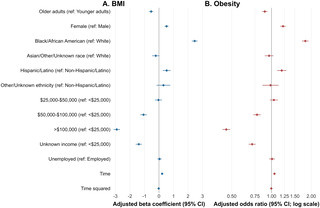
Findings revealed that the mean BMI increased slightly from 30.05 (SD = 6.67) during the Pre-Pandemic period to 30.14 (SD = 6.76) at the Pandemic Peak, before declining to 29.96 (SD = 6.66) in the Peri-Pandemic period. Similarly, obesity prevalence showed a slight increase from 43.1% to 43.4%, followed by a decrease to 42.8%. The study highlighted significant differences in BMI and obesity rates among various demographic groups, with female, Black/African American, and Hispanic/Latino participants exhibiting higher adjusted BMI and greater odds of obesity compared to their reference groups. Conversely, higher income levels were associated with lower BMI and obesity odds.
The research also identified significant interactions between time and sociodemographic subgroups, particularly concerning age and employment status. These findings underscore the importance of addressing health disparities and ensuring equitable access to obesity-prevention resources, especially in the wake of the pandemic.
Why Indicates Matters Here
Overall, the study indicates that while there were statistically detectable changes in BMI and obesity across the pandemic-defined periods, the differences were modest. However, the persistent disparities based on sex, race, ethnicity, and income highlight the need for targeted public health interventions to support vulnerable populations in managing their weight and improving overall health outcomes during and after the pandemic.
Addressing Health Disparities in Pandemic-Related Obesity Trends
The implications of these findings are significant, as they provide insights into how the pandemic has affected health behaviors and outcomes, particularly among historically marginalized groups. By focusing on these populations, the study emphasizes the need for tailored strategies to mitigate the impact of the pandemic on obesity and related health issues.
The data used in this study were sourced from the All of Us Research Program, a nationwide initiative aimed at collecting diverse health data from at least one million participants across the United States. This program seeks to enhance the understanding of health disparities and improve health outcomes for all populations. The study was funded by the National Institutes of Health and followed strict ethical guidelines to ensure participant privacy and data integrity.