Dietary Habits and Their Possible Link to Crohn’s Disease Risk

A recent study has explored the connection between dietary habits and Crohn’s disease, a chronic condition characterized by inflammation in the digestive tract. The research involved 219 adults diagnosed with Crohn’s disease and 395 adults without the condition, all residing in Riyadh, Saudi Arabia. Participants reported their consumption of various foods, including fast food, carbonated soft drinks, spicy dishes, and fruit. The goal was to identify eating habits that might be associated with the risk of developing Crohn’s disease.
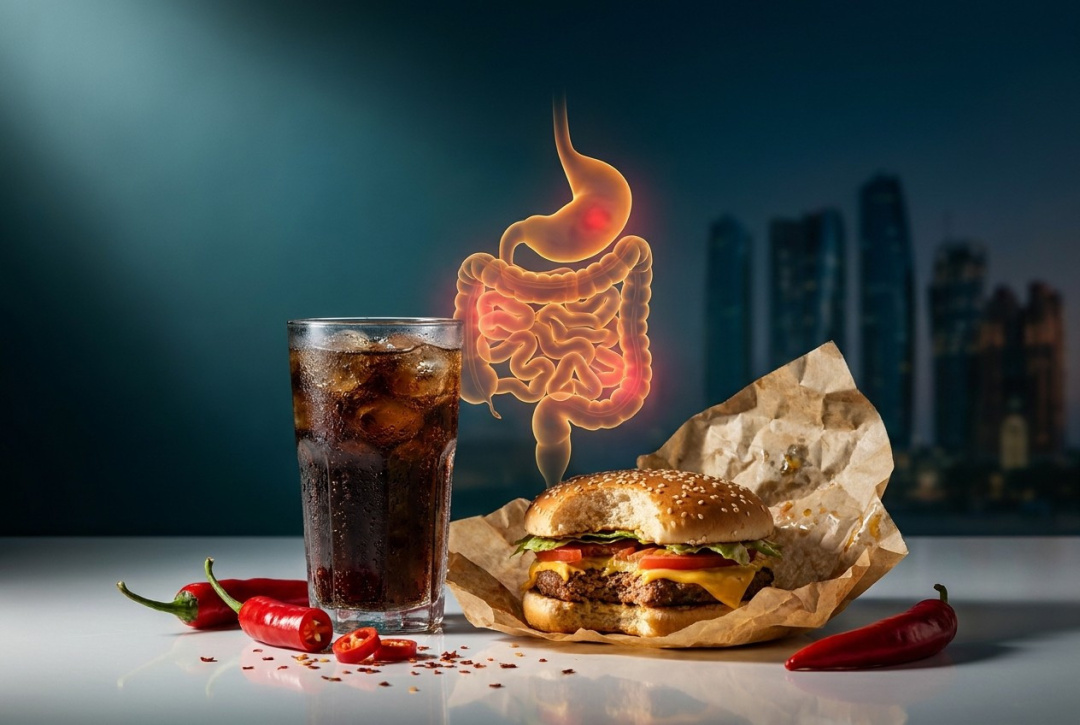
The findings indicated that individuals with Crohn’s disease were more likely to frequently consume fast food, drink carbonated soft drinks, and eat spicy foods compared to those without the condition. Interestingly, the study also noted that participants with Crohn’s reported eating fruit more often, which complicates the interpretation of the results. Typically, fruit is considered a healthy dietary choice, making it challenging to categorize foods as simply good or bad based on this research alone.
Moreover, the study revealed that those who consumed less fast food, fewer carbonated drinks, and spicy foods had lower odds of being diagnosed with Crohn’s disease, regardless of their fruit intake. This suggests that researchers should consider overall dietary patterns rather than focusing on individual foods when assessing dietary impacts on health.
It is crucial to note that this study does not establish a direct cause-and-effect relationship between these foods and Crohn’s disease. The researchers collected data on existing diagnoses and past eating habits, which allows for the identification of associations but not definitive conclusions about causation. Factors such as the influence of Crohn’s symptoms on dietary choices may also play a role; individuals might alter their diets in response to early symptoms before receiving a formal diagnosis.
How Additionally Changes the Balance
Additionally, the reliance on participants' recollections of their eating habits introduces potential inaccuracies. Those already aware of their digestive condition may report their diets differently than those without such knowledge. Furthermore, since the study focused on a specific population in one city, the findings may not be generalizable to individuals with different dietary practices or lifestyles in other regions.
Navigating Dietary Choices for Crohn’s Disease Management
While the study highlights certain dietary trends among individuals with Crohn’s disease, it does not warrant drastic dietary restrictions based on these findings alone. A varied diet rich in nutrient-dense foods remains a sensible approach for maintaining overall health. However, individuals with Crohn’s disease may need to tailor their diets according to their symptoms, disease activity, and nutritional requirements.
In summary, while fast food, fizzy drinks, and spicy foods were reported more frequently by those with Crohn’s disease, this does not imply that these foods are the cause of the condition. Instead, it emphasizes the importance of focusing on a balanced eating pattern that supports overall health rather than labeling specific foods as harmful.