Five Effective Ways to Combat the Effects of Prolonged Sitting
Prolonged sitting can have detrimental effects on the body, impacting circulation, muscle function, and even mental clarity. Kuo-Pin Wu, in his article, highlights five effective strategies to counter these effects, making it especially relevant for those who spend long hours at desks. The recommendations include brief walking breaks, gentle exercises, and the stimulation of acupoints, all of which can help integrate movement into a busy day.
Wu notes that sitting for extended periods can lead to lower back stiffness and sluggishness. He suggests that regular movement can activate muscles and alleviate tension in the body. A study mentioned in the article found that taking five-minute walking breaks every hour can significantly improve fatigue and mood, ultimately enhancing work performance. This aligns with general health advice from organizations like the Mayo Clinic, which recommends standing up and moving every 30 minutes.
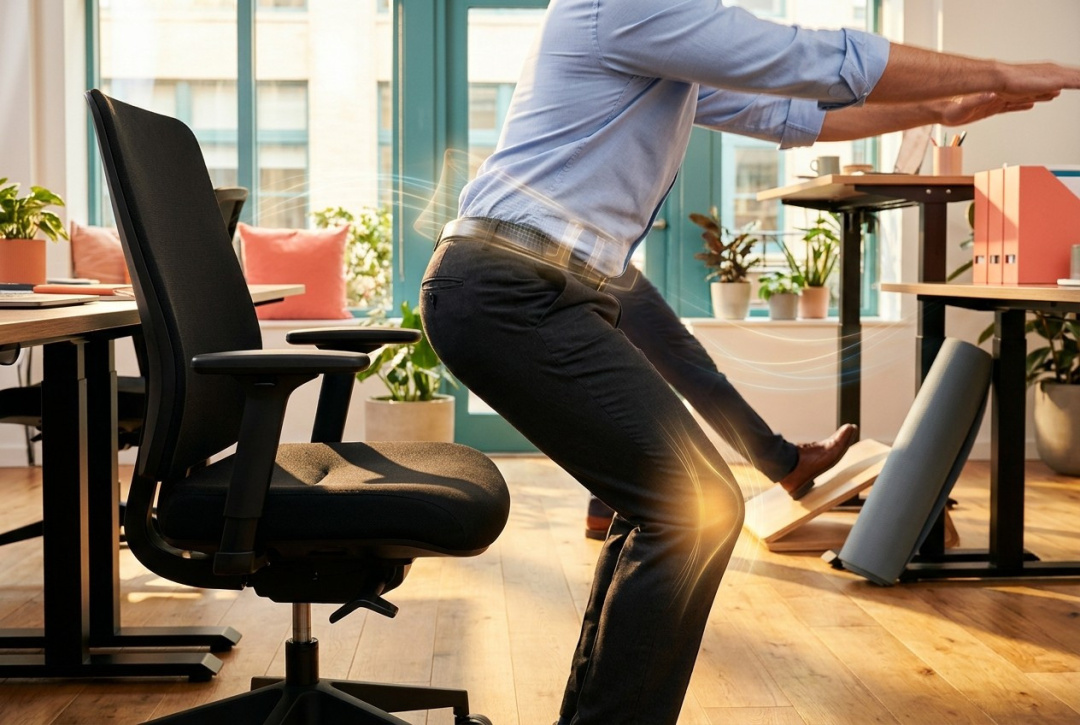
One practical tip Wu offers is to perform gentle half squats every 20 minutes. This simple exercise can engage thigh and gluteal muscles without putting excessive strain on the knees. For those with knee issues, he advises adjusting the range of motion or using a chair for support. Additionally, tapping the Supporting Middle acupoint, located at the back of the knee, can help manage lower back discomfort and improve circulation.
Wu emphasizes the importance of stretching the muscles along the back of the legs to counteract tightness that can arise from prolonged sitting. He explains that the Bladder meridian, according to traditional Chinese medicine, runs along the back and can be affected by tight muscles in this area. Using a slant board for calf and hamstring stretches can help alleviate tension and improve flexibility.
The Importance of Core Strength in Reducing Discomfort
Another key point Wu makes is about core strength. He explains that a weak core can lead to increased strain on the lumbar spine, especially for those with abdominal fat. Incorporating leg raises can help activate core muscles and support the spine, reducing the risk of discomfort. Wu concludes that making small movement breaks a habit can significantly improve overall well-being, especially when repeated throughout the day.
Integrating Movement for Enhanced Well-Being
Research supports the idea that interrupting sedentary behavior can have health benefits. A Norwegian study indicated that walking for about 100 minutes daily could reduce the risk of chronic low back pain by nearly 25%. This reinforces the importance of integrating movement into daily routines, particularly for those who may not have time for longer exercise sessions.
By adopting these five strategies, individuals can make meaningful changes to their daily routines, enhancing their physical health and overall quality of life. Wu's advice serves as a reminder that even small adjustments can lead to significant improvements in well-being, particularly for those with sedentary jobs.