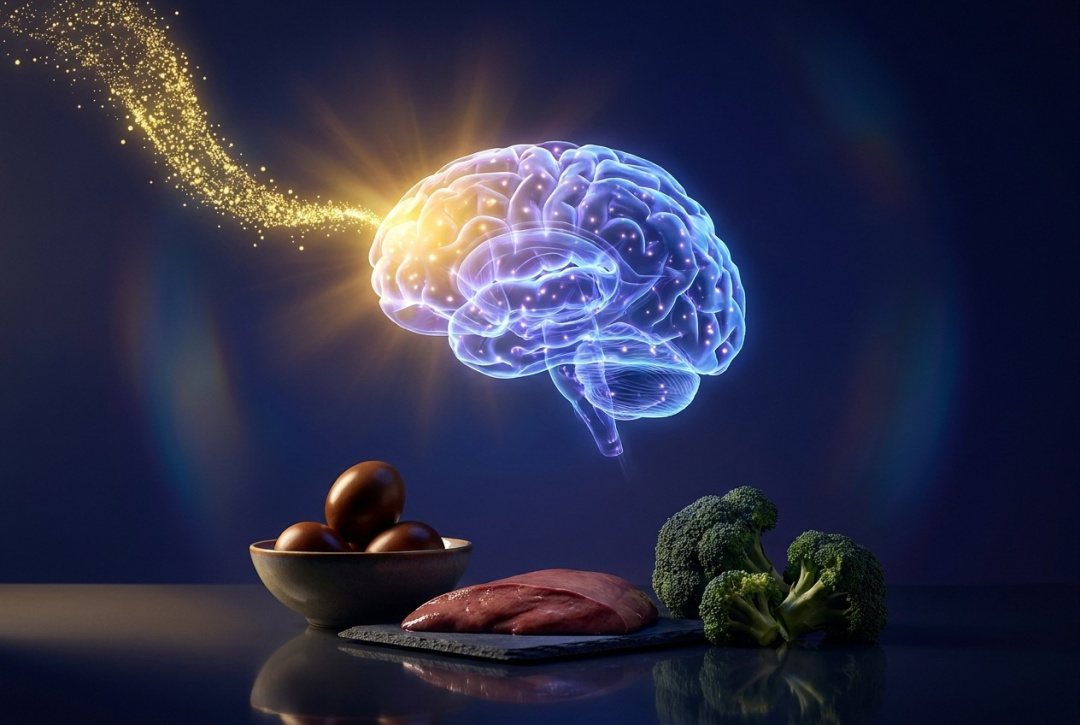
Study Links Lower Brain Choline Levels to Anxiety Disorders
A new meta-analysis published in the journal Molecular Psychiatry has found that individuals with anxiety disorders, including generalized anxiety disorder, panic disorder, and social anxiety disorder, have lower levels of choline-containing compounds in their brains compared to healthy controls. This essential nutrient is reported to be about 8% lower in the brains of those suffering from these conditions. The findings, highlighted by UC Davis Health, provide a biochemical dimension to anxiety, which is typically discussed in terms of serotonin levels, stress exposure, and sleep quality.
The study indicates that this pattern of lower choline levels is consistent across various anxiety diagnoses, suggesting a shared biological feature among these conditions. Choline is crucial for brain and nervous system health, as it is utilized in the production of acetylcholine, a neurotransmitter that plays a vital role in memory, learning, attention, and mood regulation. Emerging research indicates that adequate choline levels may be important for maintaining brain health and emotional stability.
According to the analysis, when the brain is under constant stress or heightened alertness, it may deplete choline faster than it can be replenished. This depletion could affect the brain's ability to maintain normal signaling, particularly under chronic stress. The authors of the analysis emphasize that while their findings suggest a correlation between anxiety disorders and lower choline levels, they do not imply that choline deficiency is a direct cause of anxiety. This distinction is crucial for readers seeking a straightforward solution to a complex condition.
The wider body of nutritional literature has long established a connection between nutrient status and behavioral health. A 2020 review published in Neuroscience and Biobehavioral Reviews pointed out that poor nutrition could contribute to the underlying pathology of behavioral health disorders and may hinder treatment and recovery efforts. Other studies have indicated that deficiencies in essential nutrients, including choline, are significant factors that can be modified to improve mental health outcomes.
Challenges in Achieving Adequate Choline Intake Through Diet
Despite the importance of choline, the report notes that it can be challenging to obtain sufficient amounts through diet alone. A 2020 report from the Dietary Guidelines Advisory Committee found that many Americans do not meet the recommended intake levels for choline. This nutrient is found in various foods, but achieving adequate levels may require careful dietary planning.
Navigating Choline Supplementation for Mental Health
Citicoline, a naturally occurring compound in the body, can be taken as a supplement to enhance its therapeutic effects. However, the authors caution that higher doses of choline can lead to undesirable side effects, such as a fishy odor, due to its metabolism in the gut. To mitigate these effects, it is advisable to divide doses or take smaller amounts. Additionally, lecithin is identified as a source of choline that supports brain cell function, while other compounds like NAC may help protect against acetylcholine depletion caused by environmental toxins.
In conclusion, while the findings from this meta-analysis underscore the potential link between lower choline levels and anxiety disorders, they also highlight the complexity of mental health conditions and the need for a comprehensive approach to treatment that includes nutritional considerations.