Study Reveals Exercise May Restore Muscle's Cancer-Fighting Mechanism
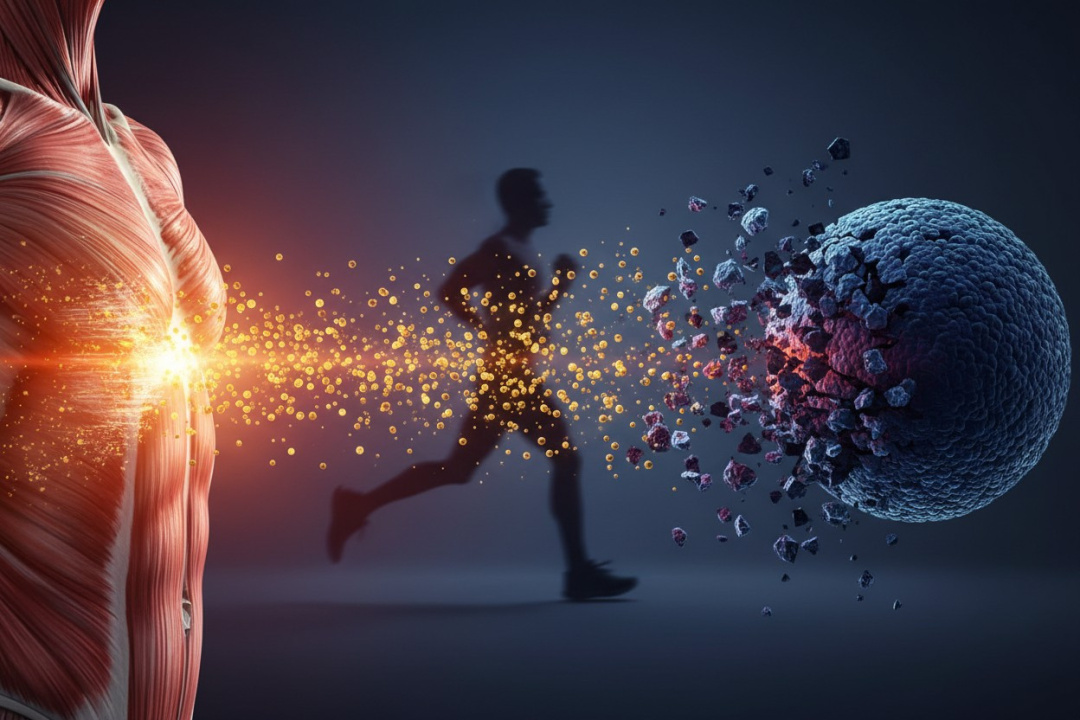
A recent study conducted by researchers at Duke-NUS Medical School in Singapore has provided insights into how exercise may restore a muscle's ability to combat cancer. The study, published in Nature Communications, highlights that healthy muscle tissue releases microscopic packages known as extracellular vesicles, which contain a molecule named miR-7a-5p. This molecule has been shown to inhibit tumor growth by blocking a protein called TEAD1, which is instrumental in tumor proliferation.
Building on previous research that indicated exercise lowers cancer risk, the study led by Dr. Sam Orange from Newcastle University found that even brief periods of vigorous exercise can trigger biological changes that halt the growth of bowel cancer cells. Another analysis suggested that exercise activates repair proteins and helps preserve lean body mass, further supporting the notion that physical activity plays a critical role in cancer prevention.
In their experiments, the researchers observed that both treadmill and wheel exercises in older mice reactivated the necessary pathways for extracellular vesicle production. The authors concluded that exercise could potentially restore the muscle's cancer-fighting defenses. The study identified SDC2, a protein essential for the assembly and release of these vesicles, as a key player in this process. Notably, SDC2 levels decline significantly in aging muscle, and the Notch signaling pathway, which regulates SDC2, becomes less active as muscles age.
The findings also included observations from fruit flies, where young muscle was effective in controlling intestinal overgrowth, unlike aged muscle. In laboratory tests involving mice, vesicles derived from healthy muscle cells were found to suppress various cancer types, including colorectal, lung, and bile duct cancers, while vesicles from damaged cells showed no such effect.
Additionally, the study involved implanting human colorectal cancer cells into living mice, revealing that tumors in older mice grew larger than those in younger specimens. When vesicle release was chemically blocked in young mice, their tumors grew comparably to those in older mice, underscoring the significance of vesicle production in tumor suppression.
The research team also highlighted that exercise is known to enhance immune function, and their study suggests a specific mechanism by which this occurs—through the restoration of the vesicle pathway. They further explored the potential of delivering SDC2 directly into aged muscle, achieving similar effects as exercise, which underscores the importance of this pathway.
Despite the promising results, the study was conducted using fruit flies, mouse cells, and mouse cancer models, and the authors emphasized that human studies are necessary to validate these findings. They noted observational data linking age-related muscle loss, known as sarcopenia, to an increased risk of several cancers, although causation has not been established.
The authors called for future research to measure miR-7a-5p levels in muscle vesicles from individuals with and without muscle loss to further understand the mechanisms at play. Overall, the study provides a compelling link between muscle health and tumor suppression, suggesting that exercise may be a vital factor in restoring this defense, although further investigation in humans is warranted.