11 Nuts and Seeds Rich in Magnesium for a Balanced Diet
Magnesium is a vital mineral that plays a crucial role in muscle and nerve function, blood sugar regulation, and bone health, as noted by the National Institutes of Health (NIH). The daily recommended intake is between 400 to 420 milligrams for adult men and 310 to 320 milligrams for adult women. Magnesium is involved in over 300 enzymatic reactions in the body, including energy production and blood pressure regulation.
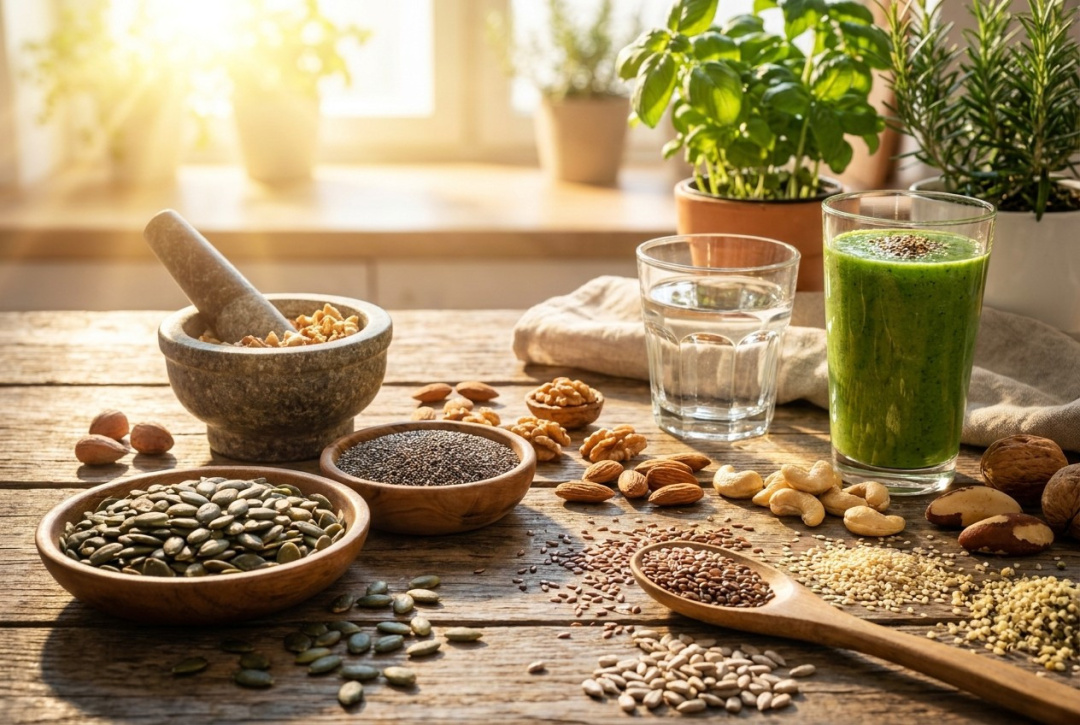
According to a recent report from Health.com, many Americans do not get enough magnesium from their diets, a concern reflected in national survey data. The report suggests that nuts and seeds can be practical additions to meals and snacks, providing not only magnesium but also protein, healthy fats, and fiber. The highlighted sources include almonds, cashews, peanuts, pumpkin seeds, chia seeds, flaxseeds, sunflower seeds, sesame seeds, Brazil nuts, walnuts, and hemp seeds.
Among these, pumpkin seeds and chia seeds are noted to have the highest magnesium content per one-ounce serving. Specifically, one ounce of pumpkin seeds offers approximately 154 milligrams of magnesium, while chia seeds provide about 95 milligrams. Other nuts and seeds also contribute meaningful amounts of magnesium; for instance, one ounce of almonds contains around 76.5 milligrams, cashews about 82.8 milligrams, and peanuts approximately 53.3 milligrams.
The report further mentions that Brazil nuts, walnuts, flaxseeds, sunflower seeds, sesame seeds, and hemp seeds provide additional magnesium, although specific figures were not detailed in the excerpt. A registered dietitian quoted in the article emphasized that nuts and seeds are nutrient-dense options for those looking to enhance their mineral intake. Additionally, research has linked nut consumption to a lower risk of cardiovascular disease. A 2026 analysis involving eight prospective studies with 143,380 adults found that daily nut intake was associated with a reduced risk of hypertension, although the observational nature of the studies does not establish direct causation.
The report also highlights that a significant portion of the American population does not meet the recommended magnesium intake. A 2011 report indicated that approximately 45% of American adults fail to achieve the dietary allowance for magnesium through food alone, with another analysis suggesting that about 50% do not meet their daily magnesium needs.
Incorporating nuts and seeds into meals and snacks can help increase magnesium intake. The article emphasizes the importance of whole-food sources over supplements for routine nutrient consumption, aligning with guidance from the American Diabetes Association, which has stated that adequate dietary magnesium can generally be obtained through a balanced meal plan.
Research indicates that sufficient magnesium intake is linked to normal muscle, nerve, and metabolic function. A study published in the European Journal of Nutrition found that higher dietary magnesium intake correlates with larger brain volume and fewer white matter lesions. Additionally, a review of nutritional data identified plant-based foods, including nuts, seeds, and legumes, as nutrient-dense options for meeting mineral requirements.
Carolyn Dean, MD, ND, author of "The Magnesium Miracle," noted that food refining and processing can lead to significant magnesium losses. For instance, extracting oils from magnesium-rich nuts and seeds removes the mineral, and milling grains results in the loss of nearly all magnesium, with whole-wheat bread providing 24 milligrams compared to just 6 milligrams in white bread.
The report suggests that nuts and seeds can be consumed in various forms, such as raw, roasted, or ground, depending on the type. For example, pumpkin seeds can be roasted as a snack, added to baked goods, or mixed into oatmeal, making them versatile protein sources for those limiting animal products. Nutritionists recommend incorporating a variety of nuts and seeds into a balanced diet to ensure a broad spectrum of nutrients. Pumpkin and chia seeds, which can be quite affordable, are particularly noted for their magnesium, zinc, calcium, and complete protein content.