Insulin-Resistance Nutrition Products Market Expected to Reach USD 1.4 Billion by 2036
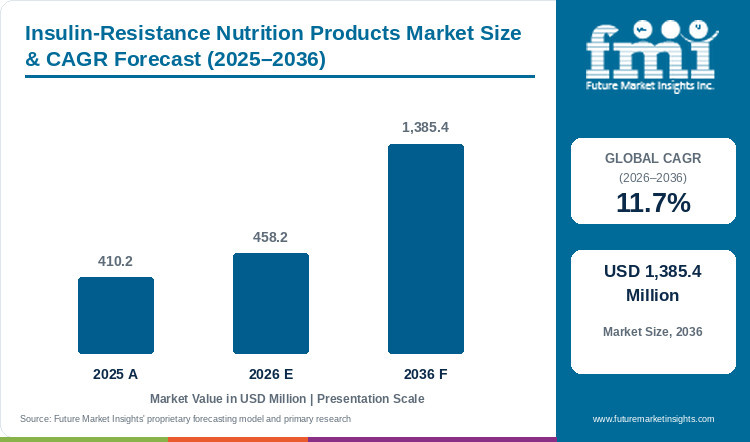
The insulin-resistance nutrition products market is anticipated to expand at a compound annual growth rate (CAGR) of 11.7% from 2026 to 2036, growing from USD 458.2 million in 2026 to an estimated USD 1.4 billion by 2036. This growth is largely attributed to the rising identification of prediabetes and the incorporation of targeted nutritional support into everyday routines. According to the American Diabetes Association, lifestyle changes and specific nutritional interventions can significantly reduce the risk of progression in individuals with impaired fasting glucose.
Key ingredients driving this market include berberine and dihydroberberine, which are expected to account for 42.7% of demand in 2026. Supplements are projected to represent 41.5% of the market, with a notable focus on consumers linked to polycystic ovary syndrome (PCOS), who are expected to hold a 42.2% share. The increasing concern around insulin sensitivity has made these products more relevant in discussions about nutrition and weight management.
Regional trends indicate that South Korea will experience the highest growth rate at 11.9% CAGR, while the United States is expected to grow at 11.3%. The Korean Health Functional Food Association has reported a significant increase in certified functional food ingredients, enhancing the commercial viability of these products. In contrast, Japan's market remains stringent, requiring extensive documentation for functional claims.
The market is segmented by key ingredient, product type, consumer demographics, form, sales channel, and region. Berberine and dihydroberberine are recognized for their concentrated dosing and compatibility with existing supplement routines, making them appealing to consumers. Supplements are favored for their controlled servings, allowing for easy integration into daily diets without the need to replace full meals.
PCOS-linked consumers are driving demand due to the direct correlation between insulin sensitivity and weight management in this demographic. However, it is important to note that one ingredient may not be effective for all consumers, and products must be tailored to meet individual needs.
Online sales channels are projected to account for 35.3% of the market in 2026, supported by educational efforts and subscription models that encourage repeat purchases. These channels provide consumers with detailed information about ingredients and serving instructions, which is crucial for informed decision-making, especially in the context of metabolic health.
Despite the promising growth, the market faces challenges, particularly concerning the quality of evidence supporting health claims. The U.S. Food and Drug Administration has issued warnings regarding unapproved disease claims associated with dietary supplements aimed at blood glucose and insulin support. This highlights the necessity for clear labeling and responsible marketing practices to ensure consumer safety and trust.
Overall, the insulin-resistance nutrition products market is evolving rapidly, driven by increased awareness of metabolic health and the demand for specialized nutritional solutions. Companies that can provide evidence-based products with clear usage instructions are likely to succeed in this competitive landscape.