GTBP-1's Role in Germline Responses to Heat Stress in C. elegans
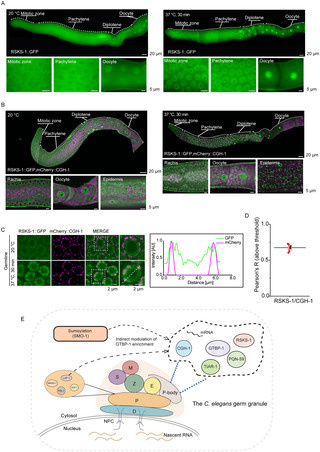
In a recent study published in PLoS Genetics, researchers explored the role of GTBP-1, a homolog of the human protein G3BP1, in the reproductive responses of the nematode C. elegans to heat stress. This research is significant as reproduction is particularly vulnerable to environmental stressors, and understanding how germ cells maintain functionality under such conditions is crucial for fertility. The study found that GTBP-1 plays a dual role: it restrains reproduction under normal conditions but is necessary for reproductive fitness when temperatures rise. Under heat stress, GTBP-1 forms distinct granules in the germline, indicating a protective response. The granules formed by GTBP-1 were shown to have a strong association with P-bodies, another type of RNA-rich structure, highlighting the interaction between these two compartments during stress responses. This association suggests a complex regulatory network that governs germline health in fluctuating environments. The researchers conducted a series of experiments, including genetic screening and RNA interference, to identify factors that regulate the dynamics of GTBP-1 granules. They discovered that certain proteins, including PQN-59 and LAF-1, are involved in the enrichment of GTBP-1 granules, while the mTOR pathway plays a role in modulating these responses. The findings contribute to a deeper understanding of how germ cells reorganize their RNA-protein assemblies in reaction to heat stress, providing insights into reproductive homeostasis and the potential implications for fertility in changing environmental conditions. The study emphasizes the importance of GTBP-1 in the context of reproductive health and environmental stress, shedding light on the molecular mechanisms that underpin fertility in C. elegans and potentially offering parallels in higher organisms.














