Extreme Heat in Nebraska: Health Risks and Agricultural Challenges
In Omaha, Nebraska, the recent early September heat wave saw temperatures soar into the mid-90s Fahrenheit, with nighttime lows remaining uncomfortably high in the 70s. Pat Wilson-Johnson found respite at the Salvation Army’s North Corps Community Center, which serves as a cooling center during such extreme weather. Reflecting on her childhood, Wilson-Johnson lamented the loss of cool summer nights, noting that now, opening a window only invites humidity. 'Nine o’clock at night, it’s still 90, 91 degrees. That’s not right,' she remarked.
Scott Harris, who works at the center, reported that many visitors enjoy lunch before settling in the lobby to cool off and hydrate. The center also distributes bags of ice to help individuals stay cool as they leave. Another organization, the Siena Francis House, which aids people experiencing homelessness, operates a cooling center during heat advisories. Director Kristy McKern mentioned that while their hours are typically from 11 a.m. to 4 p.m., staff are prepared to assist those in need outside these times.
In Lincoln, the Lincoln-Lancaster County Health Department has developed an extreme heat response plan over the past year, focusing initially on daytime temperatures but now expanding to include nighttime data. Currently, there is one cooling center in the area that operates overnight.
Nebraska is not alone in facing rising minimum temperatures, which pose an often-overlooked threat to people, livestock, and crops. Projections indicate that in the coming decades, nighttime temperatures could remain in the low 70s, resembling climates found in southeastern Kansas and southern Missouri. Eric Hunt, an agriculture meteorology and climate resilience extension educator at the University of Nebraska-Lincoln, highlighted the potential impacts of these changes.
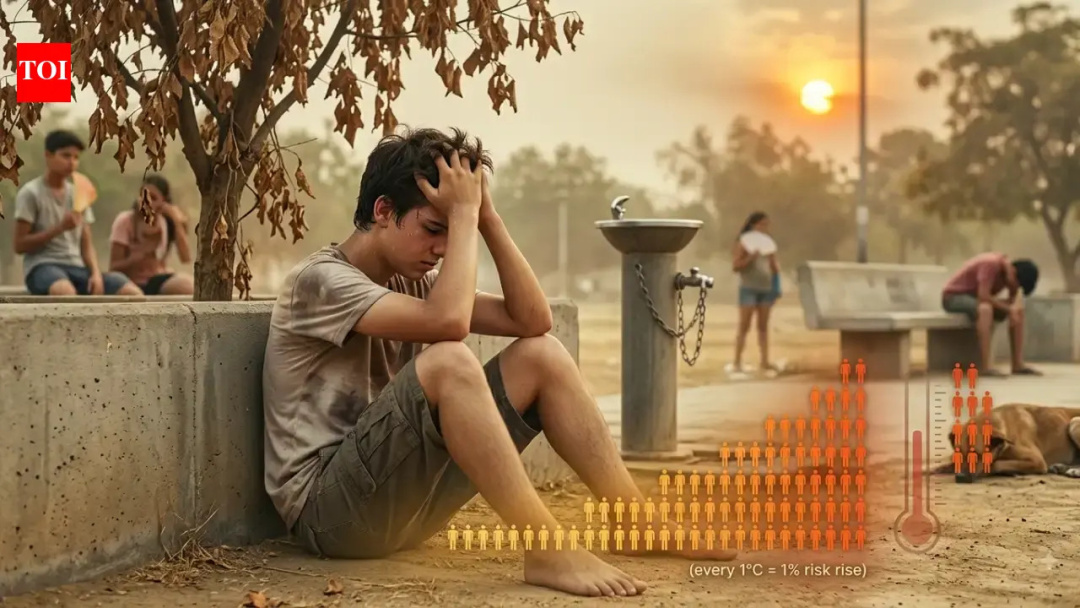
Heat can significantly stress various bodily systems, including cardiovascular, renal, and respiratory functions, as well as mental health. Jesse Bell, director of the University of Nebraska Medical Center’s water, climate, and health program, pointed out that the effects of extreme heat are not felt equally across populations. Vulnerable groups include the elderly, individuals with certain health conditions, and those without access to air conditioning. The homeless, student athletes, and outdoor workers are particularly at risk. To mitigate these dangers, Siena Francis House and its partners distribute water, snacks, and sunscreen to those spending time outdoors during heat waves. McKern emphasized the importance of providing essentials to prevent dehydration and heat-related illnesses.
Nationally, heat-related deaths outnumber fatalities from any other weather event. The impact of high nighttime temperatures extends beyond health risks; it also disrupts sleep. A report from Climate Central estimates that residents in Omaha and Lincoln could lose about 30 hours of sleep annually between 2020 and 2025 due to heat, with three hours attributed to climate change.
For those with air conditioning, the persistent heat can lead to higher energy bills. Low-income households and older buildings that lack proper weatherization may face additional challenges during heat waves. The Energy Information Administration notes that air conditioning significantly contributes to electricity consumption, with demand peaking in the late afternoon and evening as temperatures remain elevated.
The agricultural sector, Nebraska's largest industry, faces its own set of challenges due to rising nighttime temperatures. Increased temperatures can hinder the growth of key crops like corn and soybeans, as they require energy for storage rather than growth. George Graef, a UNL agronomy and horticulture professor, explained that higher nighttime temperatures could lead to smaller and fewer seeds for soybeans, while corn crops may experience reduced filling time, significantly affecting yields.
In the short term, the combination of elevated nighttime temperatures and drought conditions raises concerns about groundwater usage in irrigated agriculture. Additionally, the hot and humid conditions may foster the growth of fungi and bacteria, prompting farmers to apply more chemicals to protect their crops.
To adapt to these changing conditions, the soybean industry is exploring new technologies and capabilities. Graef expressed optimism that new crop variants will be developed to withstand these challenges. The corn industry, which has been aware of these issues for decades, has made strides in developing more resilient crops, but concerns remain about the long-term effectiveness of these adaptations. Tom Hoegemeyer, a retired UNL professor, warned that if temperature projections hold true for 2100, the limits of genetic and technological adaptations may be reached.
Livestock, including cattle, pigs, and chickens, are also affected by rising nighttime temperatures, particularly in eastern and central Nebraska where humidity is increasing. Rick Stowell, a UNL professor and animal environment extension specialist, noted that larger animals are more susceptible to heat stress. To combat these effects, producers are implementing strategies such as constructing shade structures in feedlots, enhancing ventilation, adjusting feeding schedules, and using water for cooling.
As the situation becomes increasingly challenging, Stowell remarked that livestock producers are becoming more aware of the need for adaptive measures. The ongoing rise in nighttime temperatures is a pressing issue that requires immediate attention and action to safeguard both human health and agricultural productivity in Nebraska.