Apple's Health App Update Introduces Interactive Fitness Assessments
With the public beta release of iOS 27.2, Apple has significantly overhauled its Health app, evolving it from a simple dashboard for Apple Watch metrics into an interactive wellness coach. This update introduces a cleaner layout and dynamic daily summaries, alongside 17 guided assessments that leverage the phone's camera to evaluate various aspects of fitness, including flexibility and VO2 Max.
Upon downloading the beta version, I dedicated two days to testing the new features. The app is organized into three primary tabs: Insights, Longevity, and Browse. The Insights tab dynamically highlights the most relevant metrics based on the time of day. For instance, in the morning, it displays sleep data first, followed by readiness metrics to help plan daily activities. A personalized summary generated by Apple Intelligence provides insights into one's health, such as my low Sleep Score after a restless night, suggesting I take it easy that day.
The Longevity tab offers an overview of long-term health, featuring a pie chart that quantifies wellness across seven categories: hearing, heart health, mental wellbeing, metabolic health, movement, nutrition, and sleep. Users can tap on each segment for more detailed information. Additionally, the Health Age sub-tab compares chronological age with an estimated effective age based on current health and fitness, allowing users to track changes over time and understand contributing factors.
The Browse tab retains features from the previous version, allowing users to search for specific data and pin important metrics to the top of the page. For those seeking more detailed insights, the app provides a variety of optional wellness assessments. These assessments include tests for cardio fitness, mental outlook, and sleep, with some data automatically populated from recent Apple Watch readings. Users can also import bloodwork results through a partnership with Quest Diagnostics, with appointments available via the app.
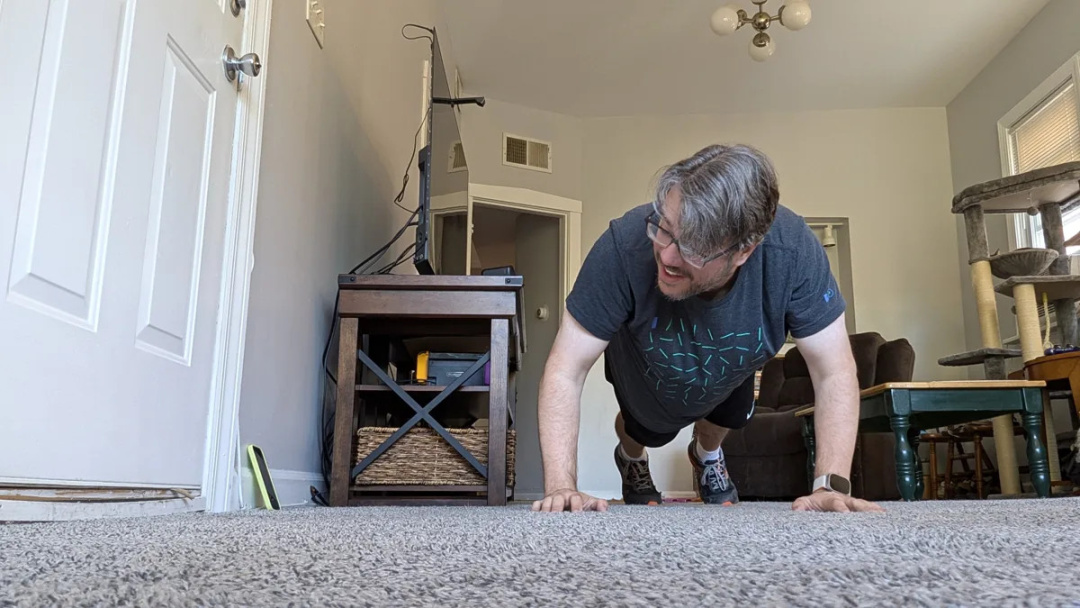
Among the most engaging assessments are those that require physical movement, utilizing the phone's camera and a connected heart rate monitor, like an Apple Watch, to evaluate balance, flexibility, strength, and VO2 Max. The assessments are straightforward and can be performed at home, although users may need ample space to move around. I found that the tests continued seamlessly even when my cat wandered into the camera's view during the VO2 Max assessment.
The flexibility assessment guides users through various movements, while the balance test requires standing on one foot for as long as possible. The cardio fitness test involves walking and running in place, measuring heart rate recovery. The strength assessment is more comprehensive, combining push-ups, planks, squats, and a quick sit-to-stand test. While the app praised my arm and core strength, it rated my lower-body strength as only 'Good,' which I found somewhat disappointing.
The flexibility results were particularly harsh, indicating that my lower-body flexibility was 'Fair' and my upper-body flexibility 'Needs Attention.' For each tested category, users can view their results and receive tailored advice for improvement. Although the suggestions to stretch more often are quite basic, the app does provide instructional videos to help users address specific limitations.
Overall, the revamped Health app represents a significant step toward bridging the gap between passive tracking and active improvement in fitness. Even in its beta phase, the camera-based assessments proved to be accurate and resilient, making it a valuable tool for those seeking clearer, actionable feedback on their fitness journey. If you own an Apple Watch and are looking for a more interactive experience, this update is worth exploring.