Galápagos Yellow-Morph Green Sea Turtles Show Unexpected Homebound Behavior
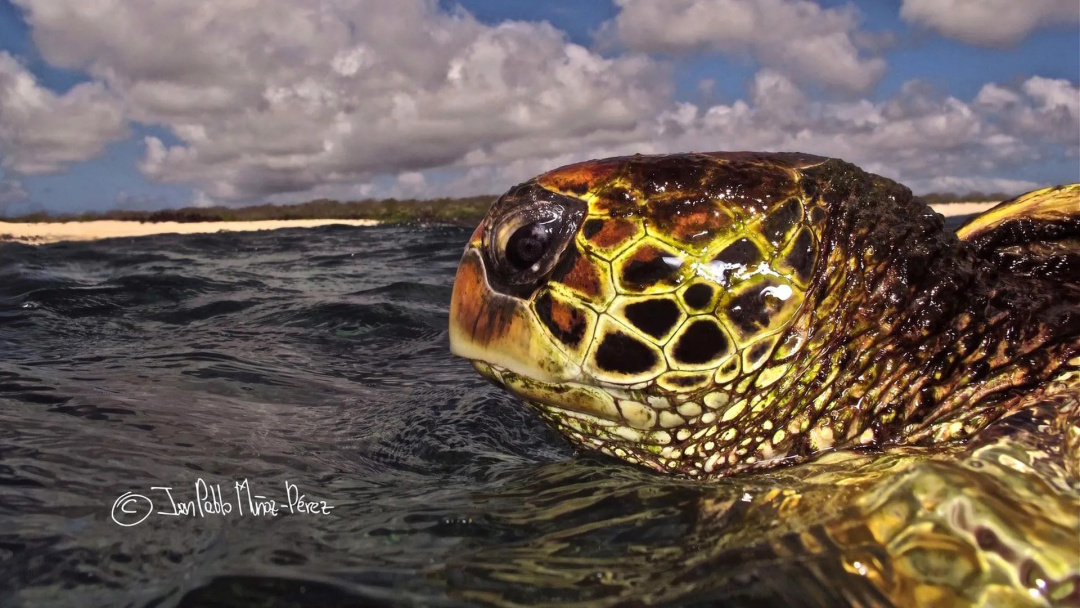
Sea turtles are renowned for their remarkable journeys across the ocean, utilizing cues from Earth's magnetic field, the sun, and ocean currents to navigate vast distances in search of food and to return to their natal beaches for reproduction. However, a study focusing on yellow-morph green sea turtles in the Galápagos has revealed unexpected behavior that challenges this perception. Instead of migrating long distances, these turtles predominantly remain close to their home waters within the Galápagos Marine Reserve.
Dr. John W. Rowe, a professor at Alma College and the lead author of the study published in Frontiers in Amphibian and Reptile Science, noted, "Here we show that 'yellow-morph' green sea turtles—one of two genetically distinct forms—occupy individual foraging areas that span one or more islands in the Galápagos. We expected them to migrate to distant beaches in the western Pacific to reproduce; yet, interestingly, none of our satellite-tagged turtles even left the Galápagos Marine Reserve over the three years of our study."
The study distinguishes between two genetically distinct forms of green sea turtles: the yellow morphs and the black morphs. Yellow morphs are typically found in tropical and subtropical regions of the western Pacific, while black morphs inhabit the eastern Pacific. The Galápagos is unique as it is the only known location where both forms coexist, feeding on similar marine vegetation.
To investigate the habitat use of yellow morphs, Rowe and his team captured nine adult turtles from four islands in the Galápagos in 2015. The group included seven males and two females, all fitted with electronic transmitters to track their movements via the Argos satellite network. The turtles were monitored for up to 418 days, with tracking concluding when a tag detached or stopped transmitting.
The results indicated a strong preference for shallow coastal habitats. While the turtles occasionally ventured as far as 25 kilometers from shore, most remained much closer to the islands. Five of the nine turtles spent the majority of their time near a single island, while others exhibited some inter-island movement. For instance, one turtle, Ainoa, traveled from San Cristóbal to Santa Cruz and then to Isabela.
Interestingly, the researchers observed a seasonal pattern in the turtles' movements, with inter-island travel occurring primarily during the cooler months from April to October. On average, each turtle occupied a home range of approximately 1,498 square kilometers, although this varied significantly among individuals.
Despite these findings, the researchers cautioned that their observations reflect only a limited timeframe in the turtles' lives. Longer migrations may occur outside the study period, particularly for females. Dr. Juan Pablo Muñoz Pérez, coauthor and professor at the Universidad San Francisco de Quito, noted, "Since female yellow-morph green sea turtles are not known to lay eggs on the beaches of the Galápagos, we believe that they will eventually leave the area to return to their natal beaches in the western Pacific. In contrast, some female black-morph green turtles do nest in the Galápagos and may be year-round residents or travel to other nearby islands."
The implications of this study extend to conservation efforts. The findings suggest that protecting only one feeding location may not suffice for the turtles' survival. As individual turtles may rely on multiple islands for foraging, it is crucial to maintain the quality of coastal habitats and the routes between islands. Rowe emphasized, "Since individual turtles may rely on waters around multiple islands, the quality of habitat that is available for foraging should be maintained intact across all islands and not allowed to degrade anywhere."