Understanding Misleading Food Labels: Common Misinterpretations in India
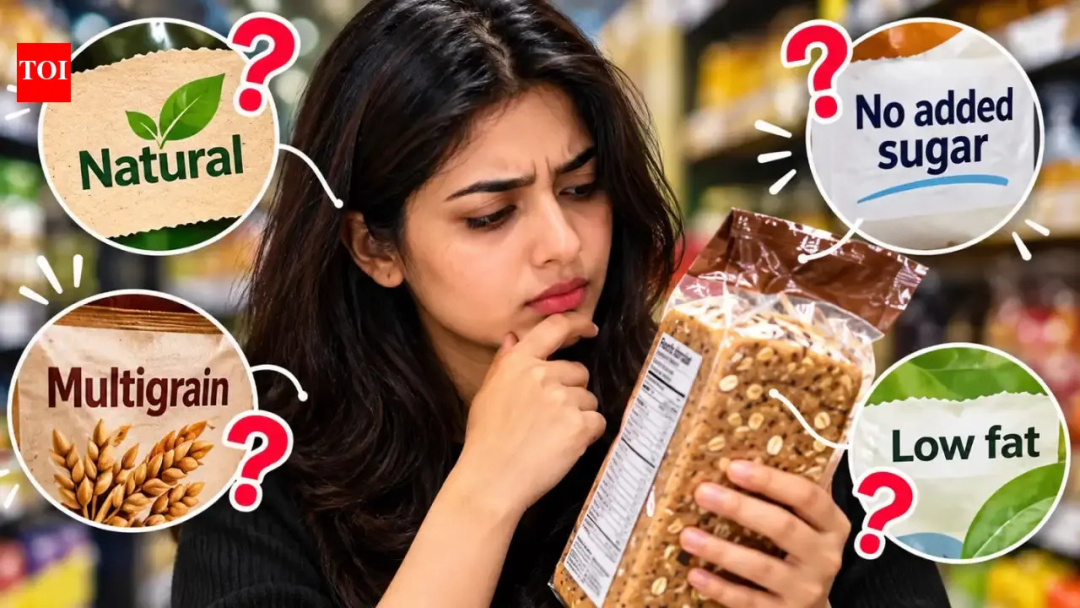
In supermarkets across India, food labels are designed to simplify the shopping experience, but terms like "natural", "multigrain", "zero cholesterol", "no added sugar", "high protein", and "made with whole grains" can be misleading. The Food Safety and Standards Authority of India (FSSAI) regulates these labels, yet many consumers misinterpret their meanings. Understanding the difference between marketing claims and nutritional facts is crucial for making informed grocery choices.
The term "natural" often carries a health halo, leading many to believe it signifies minimally processed foods free from additives. However, "natural" does not equate to "healthy". Foods labeled as natural can still be high in sugar, fat, or calories. To gain a clearer picture of what you are consuming, it is essential to examine the ingredient list and nutrition facts on the back of the packaging.
Another commonly misunderstood label is "multigrain". This term indicates that a product contains more than one type of grain, but it does not guarantee that these grains are whole grains. A multigrain bread or cereal may include refined grains alongside whole grains. For those seeking whole grains, it is important to look for specific terms like "whole wheat" or "whole grain" in the ingredient list and check the order of ingredients, as they are listed by weight.
The phrase "no added sugar" can also be misleading. This label means that manufacturers have not added sugars as ingredients, but it does not imply that the product is free from naturally occurring sugars. For instance, fruit-based products may still contain significant amounts of natural sugars, so it is vital to check the total sugars listed on the nutrition panel.
Moreover, products labeled as "sugar-free" can still contain calories. Manufacturers may replace sugar with non-sugar sweeteners or other ingredients that contribute to the caloric content. Some sugar-free snacks may also contain high levels of fat. Therefore, if you are purchasing a product with the goal of reducing calorie intake, it is important to verify the energy value rather than assuming that "sugar-free" means low-calorie.
The claim of "high protein" does not provide a complete nutritional picture. While a product may be high in protein, it could also contain considerable amounts of saturated fat, sodium, or sugar. It is essential to consider both the protein content and the serving size, as the advertised protein figure may refer to a smaller serving than what you typically consume.
The term "zero cholesterol" can be reassuring, but it is important to note that cholesterol is naturally found in animal products and absent from plant-based foods. Thus, a plant-based product can be cholesterol-free while still being high in calories or unhealthy fats. A product that is labeled as cholesterol-free may not necessarily be a healthful choice.
When fat is reduced in a product, manufacturers often add other ingredients to maintain texture and flavor, which can include starches or sugars. Not all fats are equal in terms of nutritional value, so focusing solely on the fat content can oversimplify the overall nutritional profile of a product. It is more beneficial to consider the complete nutritional content, including saturated fat, sugar, sodium, protein, and fiber.
Finally, a product that claims to have "no preservatives" may still undergo preservation through various methods, including processing or refrigeration. The absence of added preservatives does not inherently make a food healthier.
To make informed decisions while shopping, consumers should focus on the ingredient list, serving sizes, calories, protein, total sugars, saturated fat, sodium, and fiber content. Comparing similar products rather than relying on a single health claim can also help in making better choices. The most effective strategy is to avoid being swayed by impressive terms on the front of packaging and instead prioritize the detailed information found on the back.