Exploring the Potential Health Benefits of Soursop: A Nutritional Overview
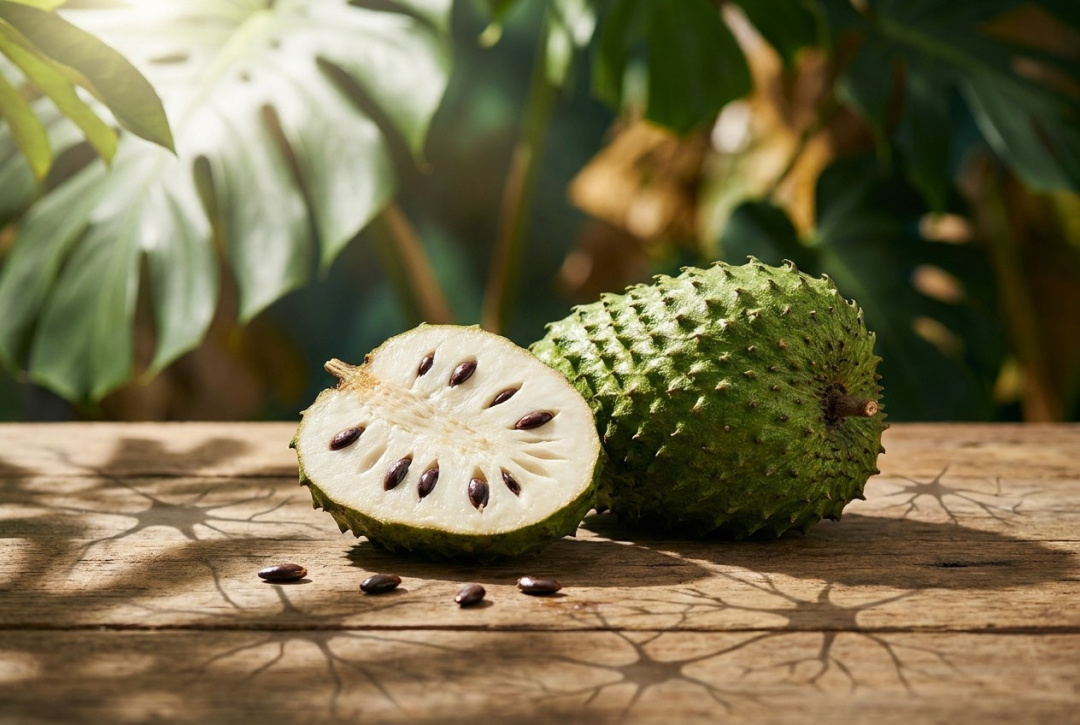
Soursop, a tropical fruit native to the Caribbean and parts of Central and South America, is also known as graviola or guanabana. This fruit, which can reach sizes of 15 to 20 centimeters in diameter, is characterized by its green skin and white flesh. According to authors Sharon Tyler Herbst and Ron Herbst in "Food Lover's Companion," soursop is cultivated in various tropical regions, including parts of Africa, Southeast Asia, and Australia. Its pulp is commonly used in juices, ice creams, jams, and candies, and it has gained popularity in North American and European markets.
A recent report from 2026 highlights that soursop is a source of fiber, vitamin C, copper, and potassium, among other nutrients. However, it notes that the evidence supporting many of the claimed health benefits is limited and primarily anecdotal. While traditional uses of soursop are well-documented, conventional medical authorities emphasize the need for more rigorous human trials to validate these claims.
The U.S. Department of Agriculture (USDA) FoodData Central indicates that a one-cup serving of raw soursop contains 148 calories, 7.42 grams of fiber, and 46.4 milligrams of vitamin C, along with other essential nutrients like copper, potassium, iron, magnesium, and folate. The fiber content in soursop meets approximately 26.5% of the Daily Value, which is significant for digestive health. The potassium in the fruit is noted for its role in muscle contraction and blood pressure regulation, further supporting its nutritional profile.
The 2026 report identifies six areas of research interest regarding soursop. Firstly, it discusses digestion, referencing a 2023 review that suggests high fiber intake may lower the risk of stomach and colorectal cancer, a benefit attributed to the soluble and insoluble fiber found in soursop. Secondly, on the topic of inflammation, the report mentions that antioxidants such as phenolic compounds and vitamin C present in soursop may help neutralize free radicals and reduce oxidative stress.
In terms of blood pressure, a 2020 study involving 143 participants with borderline hypertension found that those who consumed 7 ounces of soursop juice daily for three months experienced a reduction in blood pressure compared to a control group. Regarding blood sugar, older animal studies indicated that soursop extracts might inhibit enzymes responsible for breaking down carbohydrates into glucose, potentially slowing sugar absorption.
The report also touches on anticancer effects, citing a 2018 review that found soursop extracts showed promise in targeting cancer cells in animal and in vitro studies, although it underscores the necessity for more human research. Lastly, it mentions antibacterial properties, referencing a 2016 in vitro study that found soursop leaf extract effective against Streptococcus bacteria in oral infections, though human studies are lacking.
Despite these potential benefits, the report warns that acetogenins found in soursop may be toxic at high doses and that long-term consumption could increase the risk of atypical Parkinsonism, which includes neurological conditions similar to Parkinson's disease. It is also advised that individuals with neurological conditions should consult a doctor before consuming soursop, as regular intake may exacerbate degenerative Parkinsonism.
Soursop seeds are toxic and should be removed during preparation. The recommended preparation involves selecting a ripe yellowish-green fruit, washing it, peeling the skin, cutting it lengthwise, and scooping out the seeds. Soursop can be found in specialty stores, farmers' markets, and online, and is often used in recipes for juices, ice creams, sorbets, and smoothies.
In conclusion, while soursop is associated with various health benefits, these claims are largely based on limited research, and more studies are necessary to fully understand its effects on human health.