Teen's Severe Headache Leads to Discovery of Family Health Risk for Aneurysms
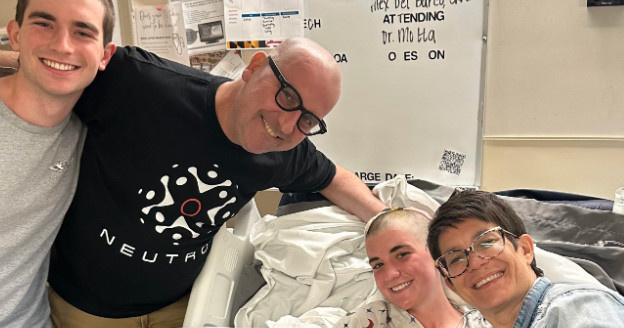
On Father's Day 2025, Caroline McCaffrey, then 18, decided to change her usual morning run to the evening due to fatigue, inviting her mother, Kim, to accompany her on a bike. Just minutes into the run, Caroline experienced an intense headache unlike any migraine she had previously suffered. "It felt like I got punched in the face," she recalled, and soon after, she began vomiting and was unable to walk. Concerned, Kim called for help, and as Caroline's symptoms persisted, Kim began to fear the worst, researching the signs of a ruptured brain aneurysm on her phone. Despite her concerns, the initial medical evaluation at a local hospital did not lead to immediate action, as the attending physician was skeptical of the possibility of an aneurysm. After receiving migraine medication that failed to alleviate her symptoms, a CT scan was eventually ordered, revealing bleeding in Caroline's brain. This diagnosis led to her transfer to the University of Maryland Medical Center, where she learned that she had two brain aneurysms, one of which had ruptured, causing an aneurysmal subarachnoid hemorrhage. Neurointerventionist Dr. Gunjan Parikh noted the severity of her condition, typically seen in older adults, and emphasized the urgency of her treatment. Fortunately, neurosurgeon Dr. Jacob Cherian was able to repair the ruptured aneurysm and the damaged brain tissue, allowing Caroline to begin her recovery. The family soon discovered a potential genetic link when reviewing their medical history, as Caroline's paternal great-grandmother had also suffered from an aneurysm. This prompted further testing within the family, revealing that Kim had two small aneurysms, which were subsequently surgically removed. While the reasons for their family's predisposition to aneurysms remain unclear, it is known that having a first-degree relative significantly increases one's risk. Caroline's experience has not only impacted her health but has also inspired her to contribute to research on aneurysms and strokes, participating in a National Institutes of Health study aimed at understanding the brain's healing processes. Now a junior at Bucknell University, Caroline is back to running competitively and is considering a career in nursing, inspired by the care she received during her treatment. Her journey highlights the importance of awareness regarding aneurysms, especially in younger individuals, and the potential genetic factors that may influence their occurrence.