Study Links Maternal Body Mass Index to Child Haemoglobin Levels in Peru
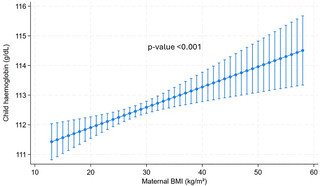
Childhood anaemia is a significant public health issue in Peru, with various maternal and environmental factors contributing to its prevalence. A recent study aimed to assess the association between maternal body mass index (BMI) and both anaemia and haemoglobin levels in children aged 6 to 59 months, utilizing data from the 2024 Peruvian Demographic and Family Health Survey. The study included 16,973 children and their mothers, focusing on maternal BMI as the exposure variable and childhood anaemia and haemoglobin concentration as the outcomes. Using Poisson regression for anaemia prevalence and linear regression for haemoglobin levels, the findings revealed that maternal BMI categories did not correlate with anaemia prevalence. However, children of mothers classified as obese exhibited higher haemoglobin levels, with an average increase of 0.72 g/dL compared to those of mothers with normal weight. Furthermore, each 1 kg/m2 increase in maternal BMI was linked to a 0.07 g/dL increase in child haemoglobin. These results underscore the need to incorporate maternal nutritional status into comprehensive anaemia prevention strategies, highlighting the necessity for further longitudinal studies to confirm these associations. The study's findings are particularly relevant given the high prevalence of anaemia among children in Peru, which reached 33.7% in 2024, and the complex interplay between maternal nutrition and child health outcomes. The implications of this research extend beyond individual health, suggesting that addressing maternal nutrition could be a pivotal component in reducing childhood anaemia rates in Peru.