Study Reveals Impact of NAGLU Inactivation on Epididymal Cell Structure in Mice
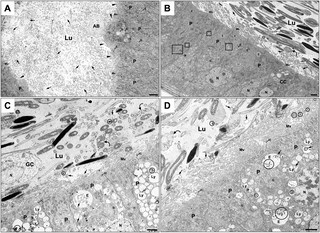
A recent study published in PLoS One examines the effects of alpha-N-acetylglucosaminidase (NAGLU) inactivation on the ultrastructural appearance of epididymal mononuclear phagocytes (eMPs) and epithelial cells in adult mice. NAGLU is an enzyme involved in the degradation of heparan sulfate, a glycosaminoglycan that plays a crucial role in various biological processes. The absence of NAGLU has been linked to Mucopolysaccharidosis III type B, a lysosomal storage disorder that may result in infertility. In this study, researchers analyzed the epididymal and testicular tissues of both wild-type and NAGLU knockout mice using light and transmission electron microscopy. They found that the NAGLU-deficient mice exhibited a massive accumulation of pale lysosomes of varying shapes and sizes within the cytoplasm of principal cells, contrasting with the dense spherical lysosomes observed in wild-type mice. This accumulation had a profound impact on the integrity of organelles such as the endoplasmic reticulum, Golgi apparatus, mitochondria, and nucleus. Additionally, the epithelium of the NAGLU knockout mice showed sporadic large, vacuolated cells identified as eMPs, which were dominated by pale lysosomes, some of which were of gigantic size. The presence of these lysosomes suggested ongoing phagocytic activity in response to the disruption of cellular function. The study highlights the critical role of NAGLU in maintaining the structural integrity of epididymal cells and suggests that its inactivation may compromise the environment necessary for sperm protection and maturation. Given the conservation of reproductive tract architecture across mammals, these findings offer insights into the implications of NAGLU deficiency in human reproductive health.