Building Food Resiliency Through Permaculture for Self-Reliance
The industrial food system is increasingly viewed as fragile, with many experts warning that it is built on precarious chokepoints that could easily collapse. This reality has become more evident as disruptions in global supply chains, such as those caused by geopolitical conflicts, have led to spikes in food prices and shortages on grocery store shelves. The current state of food security highlights the risks associated with relying on a centralized system for our most essential needs.
As trust in institutions that have historically managed food supply has eroded, many individuals are seeking alternatives that promote self-sufficiency. Permaculture emerges as a viable solution, advocating for a self-sustaining biological infrastructure that allows individuals to produce their own food. This approach not only addresses immediate food security concerns but also fosters a deeper connection to the land and the food we consume.
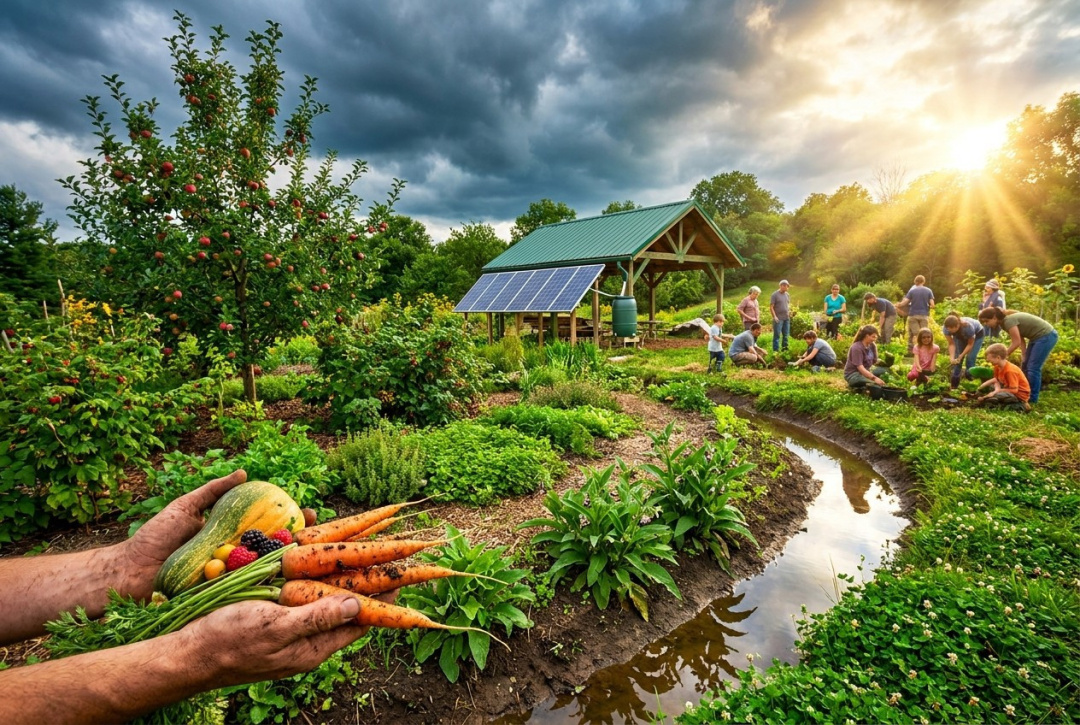
Permaculture principles emphasize observation and understanding of local ecosystems, which can lead to more resilient food production methods. Techniques such as water management, soil regeneration, and biodiversity can transform landscapes into productive systems capable of withstanding environmental stresses. For instance, capturing rainwater and creating food forests can enhance soil health and reduce dependency on chemical fertilizers, which are often detrimental to the environment.
The movement towards permaculture is gaining momentum, with many individuals leaving urban areas to embrace rural living and sustainable practices. Events like the Exit and Build Land Summit highlight this shift, bringing together those interested in off-grid living and regenerative agriculture. The growing interest in self-reliance reflects a broader recognition of the vulnerabilities inherent in centralized food systems.
Moreover, the article underscores the importance of community in building resilience. It argues that no one can achieve true self-reliance alone; rather, it requires collaboration and shared skills among community members. By fostering connections and trust, communities can enhance their collective ability to produce food and withstand external pressures.
In conclusion, permaculture represents not just a gardening technique but a radical reimagining of our relationship with food, water, and the environment. By embracing these practices, individuals and communities can reclaim their sovereignty over food production and work towards a more resilient future, free from the constraints of centralized systems that have historically dictated our food sources.