New Insights into 6-Thioguanine's Mechanism of Action Revealed by NUDT5 Research
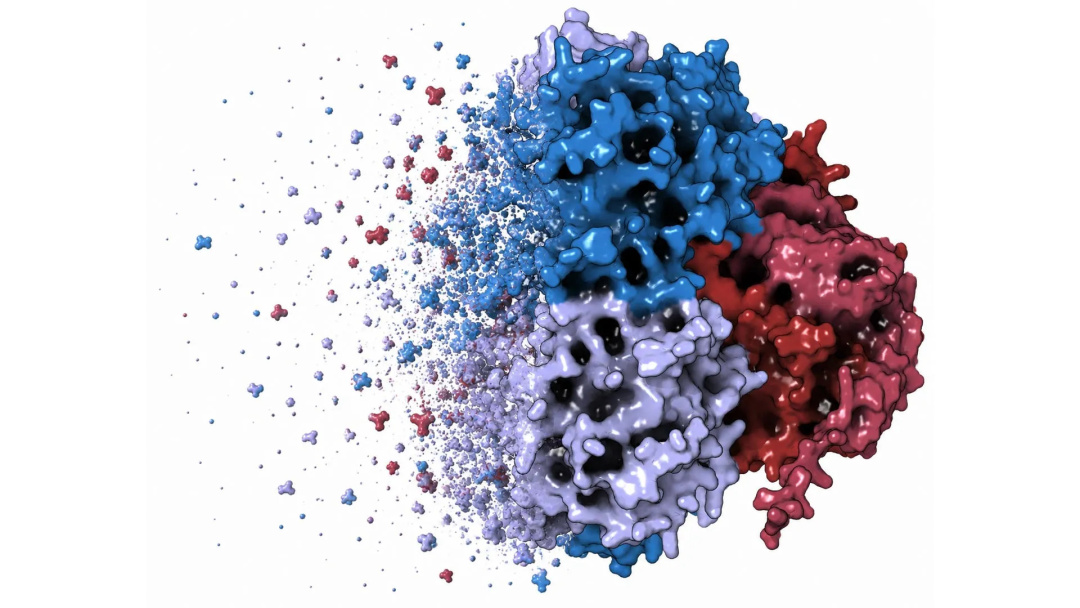
For over seventy years, 6-thioguanine (6-TG) has been a staple in leukemia treatment, yet the intricate details of its action remain partially understood. A collaborative research effort led by the CeMM Research Center for Molecular Medicine of the Austrian Academy of Sciences, in conjunction with teams from the University of Oxford, the Weizmann Institute of Science, and the University of Dundee, has identified a significant factor in the drug's cellular response: the protein NUDT5.
This discovery builds on previous findings from the Kubicek and Huber laboratories, which revealed that NUDT5 serves a dual role within cells, functioning not only as an enzyme but also as a molecular scaffold that organizes cellular metabolism. This unexpected function is critical to understanding how cells react to 6-TG.
Co-first author Tuan-Anh Nguyen from CeMM noted, "We initially expected that NUDT5 would influence 6-TG through its enzymatic activity. Instead, we found that inhibiting the enzyme had little effect. What mattered was whether the protein itself was present."
To explore the effects of NUDT5 on 6-TG response, researchers employed a novel strategy known as targeted protein degradation. This approach goes beyond merely inhibiting a protein's activity; it leads to the complete elimination of the protein from the cell. Anne-Sophie Marques, a first author of the study, explained the development of a cell-based platform that facilitated the discovery of highly selective NUDT5 degraders, which were then compared to conventional inhibitors.
The results were striking. While blocking NUDT5's enzymatic activity did not significantly alter the cellular response to 6-TG, the removal of NUDT5 conferred protection against the drug's toxic effects. This was corroborated by genetic experiments, underscoring the importance of NUDT5's physical presence in the cell.
Professor Kilian Huber from the University of Oxford emphasized the significance of these findings, stating, "Chemical degraders give us a way to separate what a protein does as an enzyme from what it does as a physical presence in the cell. In this case, that distinction was decisive: removing NUDT5 revealed biology that conventional inhibitors missed."
The study also unveiled an intriguing relationship between NUDT5 and another protein, NUDT15, which is known to influence patient responses to thiopurine drugs. The two proteins appear to exert opposing effects: loss of NUDT15 increases sensitivity to 6-TG, while reduced NUDT5 enhances resistance to the treatment. This suggests that they operate through different mechanisms, potentially guiding therapeutic strategies.
Stefan Kubicek, the corresponding author and Principal Investigator at CeMM, remarked, "Our results show that proteins can have important biological functions that are completely independent of their enzymatic activity. By removing NUDT5 rather than simply inhibiting it, we were able to uncover a hidden layer of biology that helps determine how cells respond to a clinically important drug."
While these findings do not immediately translate into new treatments, they provide valuable insights into the mechanisms controlling the effects of 6-TG. Understanding that NUDT5 influences drug response through a non-catalytic function could help clarify the variability in patient responses to thiopurine treatments. Furthermore, this research illustrates how targeted protein degradation can reveal biological functions that traditional enzyme inhibitors may overlook.
This study was supported by various organizations, including the European Research Council, the Austrian Science Fund, and the Wellcome Trust, among others. Materials were provided by the CeMM Research Center for Molecular Medicine of the Austrian Academy of Sciences, with content potentially edited for style and length.