Study Compares BMI, Waist Circumference, and Body Roundness Index in Health Outcomes
The global prevalence of obesity continues to rise, necessitating precise tools for assessing diverse health risks. A study published in PLOS One aimed to compare the prognostic associations of body mass index (BMI), waist circumference (WC), and the body roundness index (BRI) across multiple cardiovascular and mortality outcomes in a large cohort of Korean adults. This retrospective cohort study utilized data from the National Health Insurance Service database, involving 1,199,633 adults aged 55 years and older. The researchers assessed the prognostic associations for atherosclerotic cardiovascular disease (ASCVD), all-cause mortality, and atrial fibrillation (AF) over a 10-year follow-up period using receiver operating characteristic (ROC) analysis and multivariable Cox proportional hazards models.
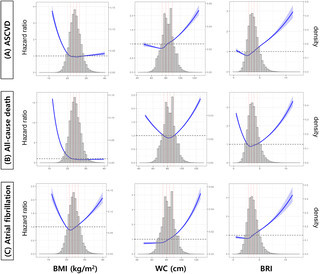
The results revealed that no single anthropometric index consistently outperformed the others; rather, the associations were outcome-specific. For ASCVD, the BRI demonstrated the highest discrimination (AUC: 0.553), followed by WC (0.540) and BMI (0.512). In contrast, BMI showed the highest AUC for all-cause mortality (0.595), particularly due to a significant inverse relationship observed in the underweight category. For incident AF, WC had the highest AUC (0.567), followed closely by BRI (0.550) and BMI (0.527). The study also highlighted that most outcomes exhibited non-linear relationships, indicating the complexity of these associations.
These findings underscore that each anthropometric index captures distinct biological aspects of adiposity, emphasizing the importance of considering specific clinical outcomes when interpreting obesity-related risks. The study protocol received approval from the Institutional Review Board of Seoul National University Bundang Hospital, and the data were collected under strict quality control guidelines to ensure accuracy.
Overall, this research contributes valuable insights into the prognostic value of different anthropometric measures in predicting health outcomes, reinforcing the need for tailored assessments in clinical practice. The study was supported by the Bio and Medical Technology Development Program of the National Research Foundation of Korea, and the authors declared no competing interests.