Evolutionary Insights into CAM Photosynthesis in Tropical Clusia Trees
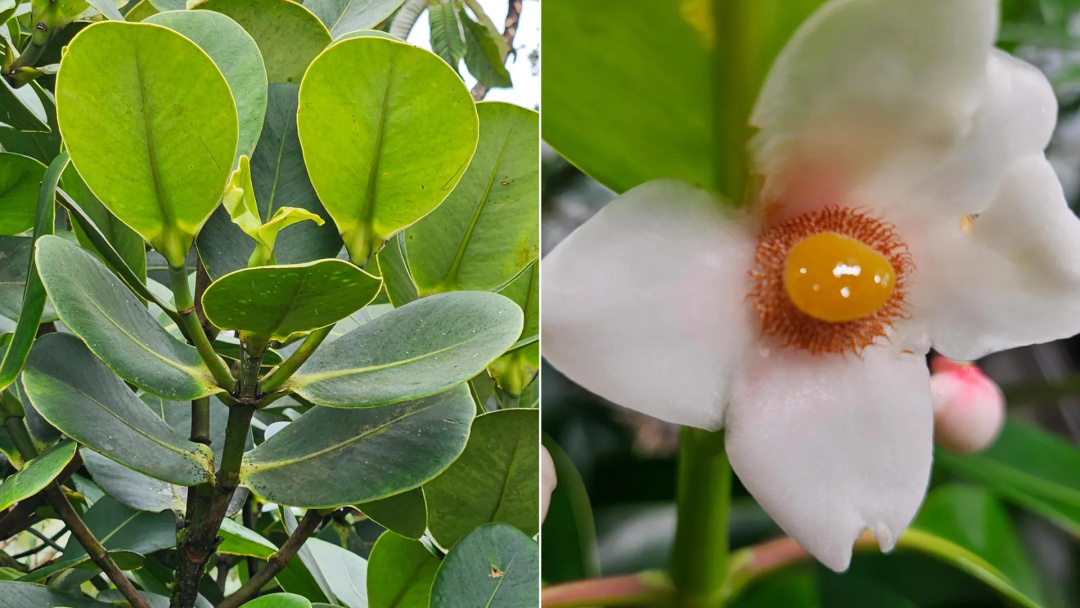
Plants have developed various mechanisms to convert sunlight into energy-rich sugars and oxygen through photosynthesis. However, during periods of water scarcity, this process can become increasingly challenging. Researchers led by Wolfram Weckwerth at the University of Vienna have investigated how a particularly efficient form of photosynthesis, known as Crassulacean Acid Metabolism (CAM), has evolved in multiple ways within the Clusia genus of tropical trees. Their findings, published in Nature Communications, shed light on the evolutionary adaptations that enable these trees to thrive in arid conditions.
The study traces back to observations made by Alexander von Humboldt in the early 1800s, when he noted that certain tropical trees did not produce oxygen bubbles from their leaves, even in sunlight. This phenomenon is attributed to the unique daily rhythm of these plants, which keep their stomata—tiny pores that absorb CO2 and release oxygen—closed during the day to minimize water loss through evaporation. Instead, these trees absorb CO2 at night, storing it as malic acid for use during the day.
To explore the genetic basis of this adaptation, the researchers compared the genomes of three Clusia species: Clusia rosea, Clusia minor, and Clusia major. This genus is particularly significant for studying photosynthesis evolution, as it contains the only known trees that utilize CAM, exhibiting a wide range of photosynthetic strategies from traditional C3 photosynthesis to strong CAM.
The genomic analysis revealed that all three species are ancient polyploids, meaning their genomes underwent duplication at some point in their evolutionary history. Over time, these enlarged genomes were reorganized and reshaped, a process known as diploidization. Lead author Hannes Kramml explains that during this time, gene copies may be lost, deactivated, or repurposed, particularly affecting genes essential for nocturnal CO2 storage in CAM metabolism.
The researchers monitored the three species under realistic greenhouse conditions, varying water availability to observe how genetic differences influenced their physiological responses. They found that Clusia rosea employs strong CAM, storing significant amounts of CO2 at night, while Clusia minor activates CAM primarily under stress. Clusia major adopts a hybrid approach, utilizing both C3 photosynthesis and CAM.
These findings suggest that the evolution of CAM in Clusia was not the result of a single event but rather a series of genomic reorganizations that allowed different species to adapt to specific ecological niches. The implications of this research extend beyond understanding tropical trees; the insights gained could inform the development of drought-resistant crops by identifying metabolic processes associated with efficient CO2 fixation and water use efficiency. Such advancements could be crucial in addressing agricultural challenges posed by climate change.