Intestinal Microbiome's Role in Modulating Glucocorticoid Levels in Neonatal Mice
A study published in PLOS One explores the relationship between the parental intestinal microbiome and glucocorticoid (GC) levels in neonatal mice, specifically focusing on the period from postnatal day (PND) 2 to 12. Glucocorticoids are steroid hormones primarily produced by the adrenal glands, but they can also be synthesized locally in various tissues. The research highlights that during early development, local GC levels in lymphoid organs are notably higher than in the bloodstream. Previous studies have indicated that the intestinal microbiome can modulate these hormone levels, potentially through the production of short-chain fatty acids (SCFAs). However, the impact of more subtle differences in microbiome composition had not been thoroughly examined until now.
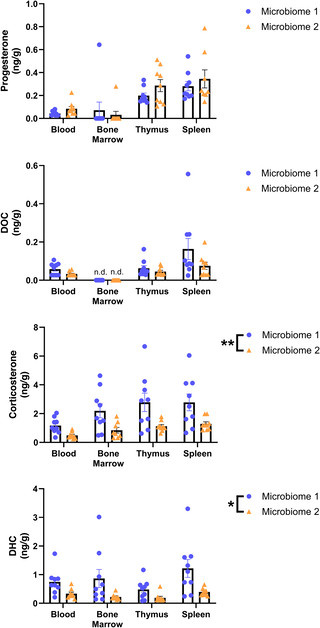
In this study, researchers established two distinct groups of C57BL/6J mice with differing microbiomes, designated as M1 and M2. Adult mice from these groups were bred, and their offspring were analyzed at PND5. Blood, bone marrow, thymus, and spleen samples were collected to measure levels of various steroids, including corticosterone, using advanced liquid chromatography tandem mass spectrometry techniques. The findings revealed that mice with the M1 microbiome exhibited significantly higher levels of corticosterone and 11-dehydrocorticosterone in both blood and lymphoid organs compared to those with the M2 microbiome. Additionally, the M1 group showed elevated levels of six SCFAs in their blood, suggesting a potential link between SCFA signaling and glucocorticoid levels.
This research contributes to the understanding of how even minor variations in microbiome composition can influence hormonal physiology, particularly in the context of metabolic health during critical developmental stages. The implications of these findings extend to the broader understanding of how gut health may impact hormonal regulation and overall health outcomes in mammals. The study underscores the importance of the intestinal microbiome in shaping physiological processes and may inform future research on metabolic health and development in both animals and humans.