PRMT5's Role in Ferritinophagy and Ferroptosis During Mycobacterium tuberculosis Infection
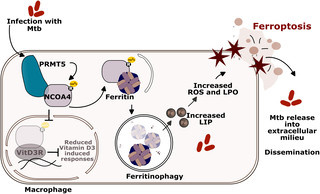
Mycobacterium tuberculosis (Mtb) has been shown to increase the availability of free iron, which leads to ferroptosis of macrophages, aiding its survival and spread. A key factor in this process is the accumulation of nuclear receptor coactivator 4 (NCOA4), which facilitates the autophagic degradation of ferritin, a protein that stores iron, in a process known as ferritinophagy. Recent research has identified a crucial post-translational modification on NCOA4 that is necessary for its interaction with ferritin under iron-rich conditions typical of Mtb-infected cells. Specifically, protein arginine methyltransferase 5 (PRMT5) adds symmetric dimethylation to NCOA4, enhancing ferritinophagy-mediated ferroptosis. Loss-of-function studies indicate that PRMT5 is essential for lipid peroxidation, bacterial survival, and dissemination in Mtb-infected mice. Furthermore, overexpressing a mutant form of NCOA4 that cannot be methylated mimics the effects of PRMT5 depletion, leading to reduced ferritinophagy in infected cells. This study uncovers the significant interaction between NCOA4 and ferritin that regulates ferroptosis and the survival of Mtb during infection. Disruption of this interaction results in lower Mtb loads and reduced disease severity. Ferroptosis, characterized by iron-dependent necrotic cell death, has emerged as a critical factor in the pathogenesis of tuberculosis, with implications for tissue damage and disease progression. Understanding the mechanisms by which Mtb manipulates host iron metabolism and induces ferroptosis could provide new insights into potential therapeutic targets for tuberculosis treatment. This research emphasizes the importance of PRMT5 and NCOA4 in Mtb pathogenesis, suggesting that targeting these proteins may offer novel strategies for combating tuberculosis.