Study Reveals How Hermit Crabs Control Growth to Fit Their Shells
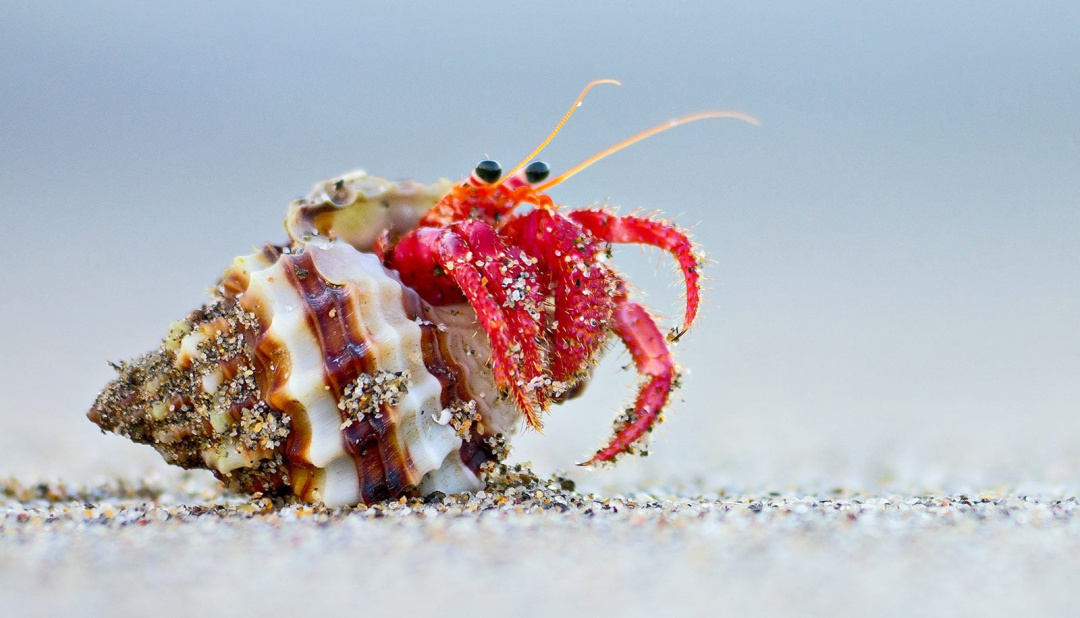
Scientists have long understood that hermit crabs manage their growth to fit into the shells they inhabit. New research from Tufts University has shed light on the specific mechanisms behind this phenomenon. The study suggests that the crabs do not merely reduce their food intake when confined to smaller shells; instead, they regulate their growth by altering the efficiency with which they utilize the food they consume. Caitlin Ball, who led the study during her graduate work, explains that hermit crabs rely on empty snail shells for protection, and the availability of appropriately sized shells can be inconsistent. When crabs find themselves in shells that are too small, their growth rate slows down. The key question researchers sought to answer was what mechanism underlies this growth regulation. To explore this, the team compared the feeding behaviors and waste production of crabs in well-fitting shells versus those in shells that were intentionally too small. Contrary to expectations, crabs in undersized shells did not eat less; instead, they exhibited increased defecation frequency. This suggests that these crabs were processing nutrients less efficiently, eliminating a larger proportion of what they consumed rather than converting it into new body mass. Phil Starks, an associate professor of biology and senior author of the study published in Invertebrate Biology, noted that while the growth slowdown had been observed for years, the underlying mechanism had remained elusive. The findings indicate that growth regulation is not solely dependent on food intake but also on how effectively an animal can convert food into body mass. This principle extends beyond hermit crabs, hinting at broader biological implications. Starks cautions against directly correlating these findings to human metabolism, emphasizing that while the study provides insights into growth regulation, it does not establish a direct link to human weight variation. He points out that across various species, including humans, body mass is influenced not only by food consumption but also by the efficiency of nutrient assimilation. Jan Pechenik, a professor emeritus of biology and co-author of the paper, expressed excitement about the study's findings, stating that it addresses a long-standing question regarding hermit crab growth. With this research, the door has been opened to further investigations into the mechanisms of growth regulation in these fascinating creatures.














