Molecular Mechanisms of Non-Opsonic Phagocytosis in Entamoeba histolytica
Phagocytosis is a critical immune defense mechanism that allows cells to eliminate pathogens through opsonic and non-opsonic pathways. In protozoa like Entamoeba histolytica, non-opsonic phagocytosis is essential for survival and plays a significant role in its pathogenicity. The life cycle of E. histolytica is closely linked to the intestinal microbiota, which provides essential nutrients and metabolic byproducts that support the growth of the trophozoite stage. Despite its importance, the molecular basis for how E. histolytica recognizes and engulfs bacteria remains largely unexplored. This review synthesizes current knowledge regarding the cell-surface molecules involved in bacteria-amoeba interactions and emphasizes new strategies to uncover their roles in non-opsonic phagocytosis.
Phagocytosis can occur through two primary mechanisms: opsonic phagocytosis, which involves the binding of opsonins to pathogens, and non-opsonic phagocytosis, which relies on direct interactions between phagocyte surface molecules and microbial motifs. While both mechanisms are vital for immune function, non-opsonic phagocytosis is particularly crucial for unicellular eukaryotes like E. histolytica, allowing them to feed on microorganisms in diverse environments, including the gastrointestinal tract.
E. histolytica is known to phagocytize bacteria efficiently, which is essential for its survival in the human colon. The interactions between E. histolytica and bacteria are influenced by the intestinal microbiota, which not only provides nutrients but also drives the encystation process necessary for the parasite's survival under adverse conditions. Interestingly, E. histolytica does not selectively target pathogenic bacteria but rather engages with beneficial bacteria present in the gut microbiota, suggesting a complex relationship that influences both the parasite's virulence and the host's health.
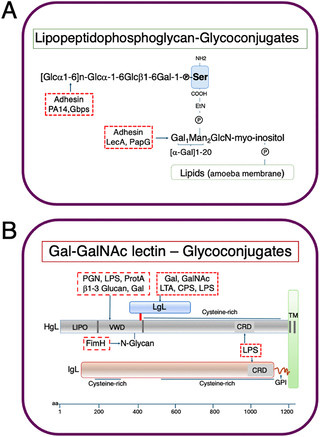
The review proposes a mechanistic model where specific surface molecules of E. histolytica act as receptors for bacterial recognition, mediating selective binding of bacterial ligands. This model underscores the importance of the glycocalyx, a gelatinous network of glycans on the cell surface, which is crucial for bacterial phagocytosis and interaction with the host environment. The authors suggest that understanding these molecular interactions can provide insights into the dynamics of non-opsonic phagocytosis and the broader implications for gut health and disease.
In conclusion, while significant progress has been made in characterizing the glycocalyx components involved in E. histolytica's phagocytic process, further research is needed to elucidate the specific receptors and ligands involved in these interactions. This understanding could pave the way for new therapeutic strategies targeting E. histolytica and its role in gastrointestinal diseases.














