Monovalent Cations Influence Eukaryotic Fluoride Channel Activity and Resistance
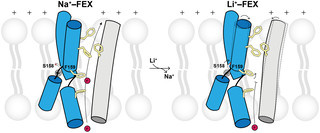
Fluoride is a common environmental inhibitor affecting various eukaryotic organisms, including fungi and plants. To combat the harmful effects of fluoride, these organisms utilize fluoride exporters (FEX) to prevent the accumulation of fluoride within their cells. The activity of these exporters is primarily sodium-dependent, but the specific mechanisms by which sodium and other monovalent cations influence FEX function have not been fully understood. A recent study has shed light on this topic, demonstrating that sodium and lithium have distinct effects on the activity of FEX channels.
The researchers conducted functional assays using a reconstituted system to explore how lithium interacts with FEX. They found that lithium competes with sodium at the central cation binding site, effectively acting as a competitive antagonist. This competition leads to a significant reduction in fluoride tolerance in yeast, indicating that lithium can diminish the efficacy of the fluoride export mechanism. The study employed cryo-electron microscopy (cryo-EM) to visualize the structure of the FEX channel in the presence of lithium, revealing that lithium binding results in a more rigid conformation of the channel, which constricts the pathway for fluoride permeation.
The findings also highlight the importance of the coordination sphere of cations in determining the activity of FEX. Sodium binding allows for a more dynamic structure of the channel, while lithium binding leads to a compact conformation that impedes fluoride transport. This structural insight is crucial as it connects the presence of different cations in the cellular environment to the effectiveness of fluoride resistance mechanisms in eukaryotes.
The implications of this research extend beyond basic science, as understanding how lithium affects fluoride tolerance could inform agricultural practices and environmental management strategies aimed at mitigating fluoride toxicity in crops and other organisms. The study emphasizes the need for further investigation into the interactions between various cations and fluoride transport mechanisms to fully understand their roles in cellular stress responses.
Overall, this research provides valuable insights into the regulatory mechanisms of fluoride channels and highlights lithium's role as an environmental antagonist in eukaryotic fluoride export, linking cellular fluoride stress tolerance to the availability of monovalent cations in the environment.