Study Evaluates PET Imaging's Role in Predicting Cardiac Recovery Post-CABG
In patients with ischemic cardiomyopathy (ICM), accurately identifying viable myocardium before surgery is crucial for determining who may benefit from coronary artery bypass grafting (CABG). A recent exploratory study examined the predictive value of quantitative metabolic indices derived from [13N]ammonia and [18F]FDG PET/CT imaging in this context. The study involved 53 patients with ICM who underwent preoperative PET imaging followed by isolated CABG. The researchers compared conventional perfusion–metabolism indices with standardized uptake value (SUV)-based indices to assess their effectiveness in predicting postoperative left ventricular ejection fraction (LVEF) recovery and the occurrence of major adverse cardiovascular events (MACE).
The study found that 60.4% of patients achieved an increase in LVEF of 5% or more, while 47.2% achieved an increase of 10% or more post-surgery. Notably, the infarct-to-non-infarct SUV ratio (SUVR) was significantly associated with both ΔLVEF ≥5% and ΔLVEF ≥10%, indicating that higher SUVR values correlated with better functional recovery. The predictive performance of SUVR was superior to that of the conventional perfusion–metabolism mismatch index for predicting ΔLVEF ≥5%, with an area under the curve (AUC) of 0.83 compared to 0.62 for the mismatch index.
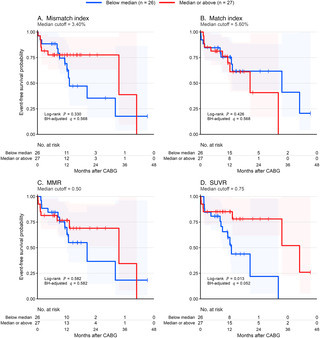
Despite these promising results, the study did not find any individual PET parameter to be associated with the time to first MACE in adjusted Cox models, highlighting the complexity of predicting long-term outcomes in this patient population. The findings support the use of SUVR as a quantitative adjunct to traditional PET viability assessment, warranting further multicenter validation to confirm these results.
This study emphasizes the importance of preoperative imaging in guiding treatment decisions for patients with ICM and suggests that SUV-based indices may enhance the predictive accuracy for postoperative recovery, potentially improving patient outcomes. However, the authors acknowledge the need for additional research to validate these findings across diverse clinical settings.














