Study Links Insulin Resistance and Uric Acid Levels to Thyroid Nodules
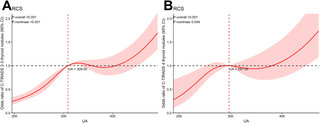
A study published in PLOS One examines the associations between metabolic score for insulin resistance (METS-IR) and uric acid (UA) levels with the prevalence of thyroid nodules. The research involved a cross-sectional analysis of 5,232 participants who underwent health examinations at the Health Management Center of the First Hospital of Shanxi Medical University from January 2018 to December 2021. The study aimed to explore how these metabolic indicators relate to thyroid nodule occurrence, including nonlinear associations across C-TIRADS categories, and to assess the role of systolic blood pressure (SBP) as a potential mediator.
The study found that individuals with the highest quartiles of METS-IR and UA had significantly higher odds of having thyroid nodules compared to those in the lowest quartile. Specifically, the odds ratios were 3.928 for METS-IR and 3.627 for UA, both with p-values less than 0.001, indicating a strong statistical significance. Nonlinear associations were also observed, particularly in the context of C-TIRADS categories 2-3 and 4, suggesting that the relationship between these metabolic factors and thyroid nodules is complex.
Exploratory mediation analyses revealed that a small proportion of the association between METS-IR and thyroid nodules could be mediated by SBP, with estimates of 6.62% for METS-IR and 1.44% for UA. However, no significant indirect associations were found for C-TIRADS categories 2-3, while METS-IR showed a significant indirect association for C-TIRADS 4 nodules. The study also highlighted that participants with both elevated METS-IR and UA exhibited the highest adjusted odds of prevalent thyroid nodules, with an odds ratio of 4.562.
Despite these findings, the study's cross-sectional design limits the ability to draw causal conclusions. The authors emphasize that while there is a notable association between metabolic dysfunction and thyroid nodules, further research is needed to clarify the underlying mechanisms and potential clinical implications. This study contributes to the growing body of evidence suggesting that metabolic health may play a significant role in thyroid disorders, warranting further investigation into how these factors interact and influence thyroid health.