NASA's Expedition 75 Crew Conducts Human Research on Exercise and Physiology in Space
A variety of human research activities commenced aboard the International Space Station (ISS) as part of NASA's Expedition 75. This week, crew members engaged in studies focusing on body measurements, exercise monitoring, and breath rate recording, all of which are essential for understanding the physiological effects of microgravity on astronauts. Station commander Jessica Meir and flight engineer Jack Hathaway, both from NASA, started their work in the Columbus laboratory module by taking body measurements using a tape measure. They entered the data into the EveryWear app on a tablet, which will be analyzed by ground-based doctors. This research is vital for comprehending how weightlessness influences an astronaut's height and body circumference, aiding in better suit sizing and health monitoring. Notably, astronauts can experience physical changes such as spinal elongation and fluid shifts toward the head in microgravity.
Following this, Meir collaborated with NASA flight engineer Anil Menon to transfer cargo in and out of the Cygnus XL cargo spacecraft, which has been docked to the Unity module since April 13. They also prepared cargo for return to Earth aboard the SpaceX Dragon spacecraft, scheduled for the upcoming Crew-12 mission conclusion. Menon received training on tools for monitoring the approach and rendezvous of the Dragon spacecraft, which is anticipated to arrive at the ISS with the Crew-13 mission in early October.
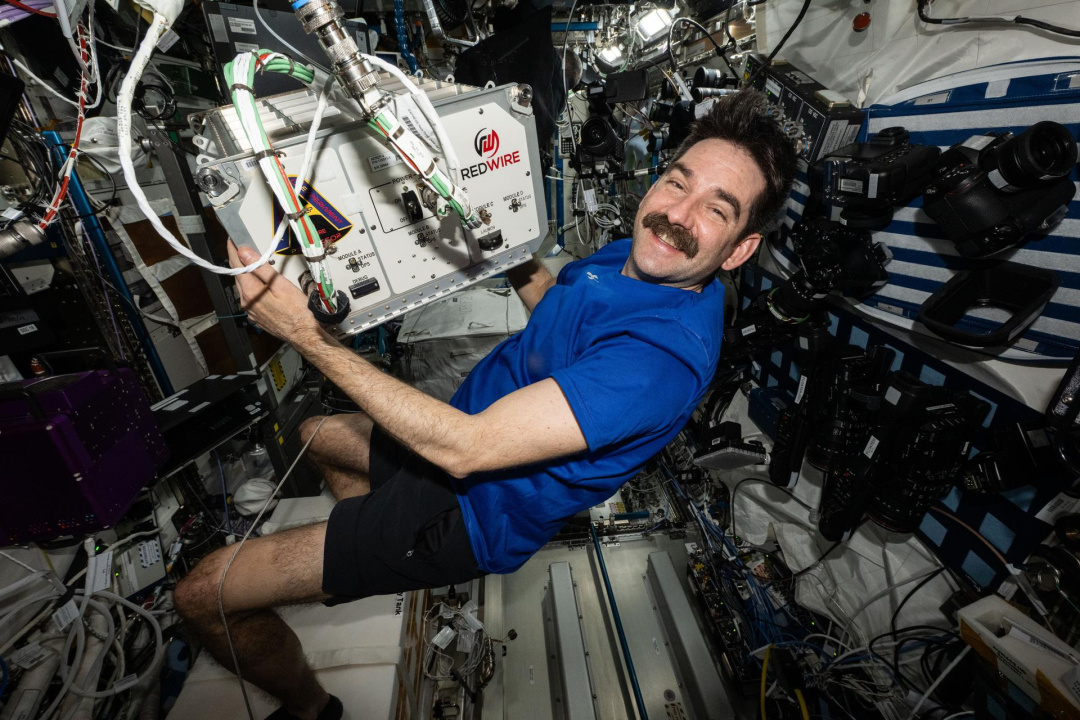
Hathaway supported the cargo operations and concluded his shift with scientific photography in the Harmony module, capturing images of 3D colloidal crystals. These tiny particles suspended in liquid are part of research aimed at advancing space-based manufacturing processes that could benefit both Earth and space industries.
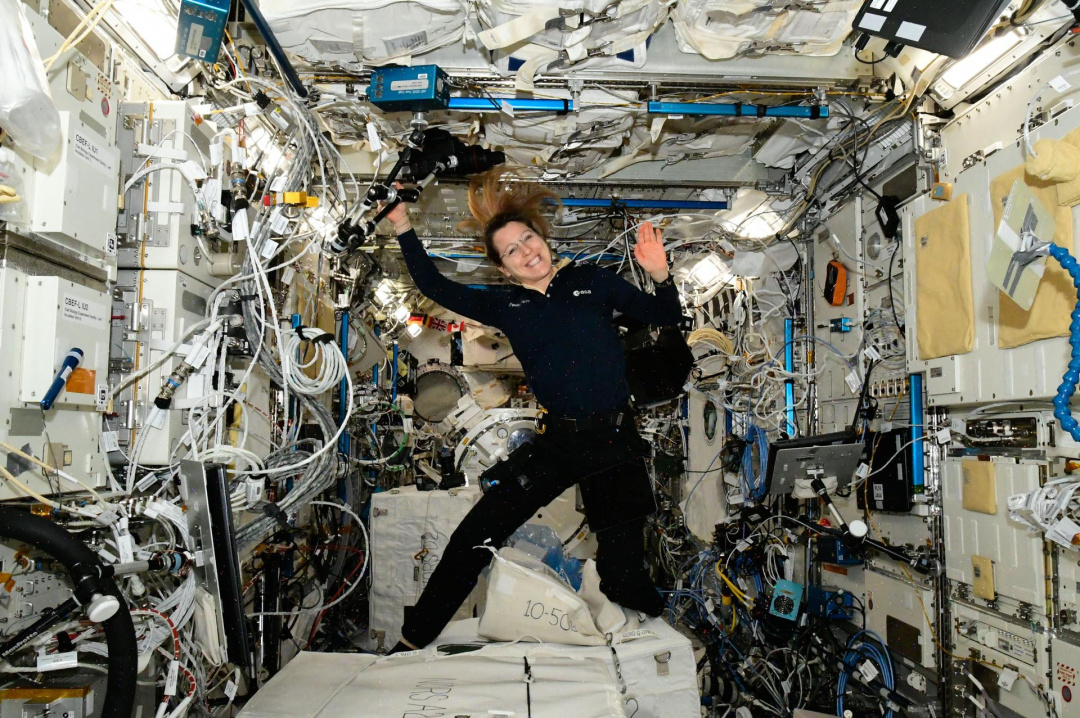
Flight engineer Sophie Adenot from the European Space Agency (ESA) set up a motion capture system to document her workout on the advanced resistive exercise system in the Tranquility module. By wearing specialized markers and performing resistance exercises, she provided data that researchers will analyze to understand the muscle forces and bone stresses experienced by astronauts during exercise in microgravity. This research is crucial for developing effective workout regimens to maintain astronaut health on long-duration missions to the Moon, Mars, and beyond.
Additionally, Roscosmos flight engineers Pyotr Dubrov and Anna Kikina began unpacking Progress 96, the latest cargo craft that delivered nearly three tons of supplies, including food and fuel. They also studied the effects of microgravity on the respiratory system, utilizing an acoustic monitor to record their rapid exhalation rates.
Andrey Fedyaev, another Roscosmos flight engineer, tested a lower body negative pressure suit designed to counteract fluid shifts caused by microgravity. This suit may help ease astronauts' transition back to Earth's gravity after extended space missions. Fedyaev also assisted in unloading Progress 96 and activated automated Earth-imaging equipment to capture images of regions including Asia, the Pacific Ocean, and North America during the crew's sleep shift.
For ongoing updates about the ISS activities, interested individuals can follow the space station blog and NASA's social media accounts.