Urolithin A Shows Potential in Supporting Intestinal Health and Repair
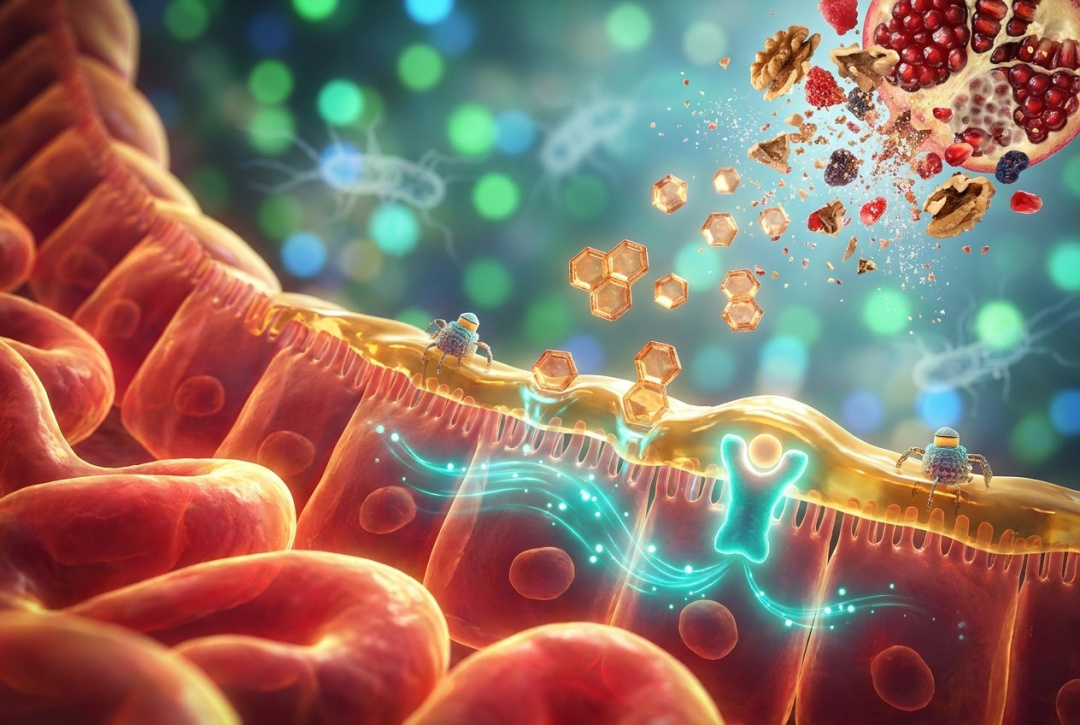
A recent study from the University of Louisville has revealed that urolithin A (UroA), a microbial metabolite generated by gut bacteria during the digestion of foods such as pomegranates, walnuts, and berries, may play a significant role in protecting the intestinal lining and guiding future treatments for inflammatory bowel disease (IBD). IBD, which includes conditions like Crohn's disease and ulcerative colitis, affects millions globally, making the findings particularly relevant. The research was led by Venkatakrishna Rao Jala, an associate professor in the Department of Microbiology and Immunology at UofL's Brown Cancer Center. The study suggests that UroA activates a protective pathway in the intestine, which could help maintain gut health and potentially lead to more targeted treatments for IBD, rather than broadly suppressing immune responses. Central to the study is the aryl hydrocarbon receptor (AHR), a protein that responds to various environmental signals, including dietary components and gut microbes. While AHR activation has been linked to harmful effects from certain environmental toxins, previous research indicated that beneficial dietary compounds could also activate AHR in ways that support intestinal health. The new findings suggest that the effects of AHR activation depend on both its location and the intensity of activation. The researchers found that UroA selectively activates AHR in intestinal epithelial cells, which are crucial for forming and protecting the gut lining. This selective activation triggers a cellular defense mechanism known as the NLRP6 inflammasome. Although inflammasomes are often associated with damaging inflammatory responses, this study indicates that they can also serve a protective function under specific conditions. When UroA activated AHR in these cells, it initiated the release of molecules essential for normal intestinal function, aiding in the repair of the gut lining, reinforcing the intestinal barrier, increasing mucus production, and strengthening antimicrobial defenses without exacerbating inflammation. Notably, Dr. Steven R. Gundry, an expert in gut health, pointed out that not all polyphenols are efficiently absorbed without the right gut bacteria. He noted that only about 20% of the general population possesses the necessary gut microbiota to produce urolithin A, while approximately 50% of centenarians studied have this ability. Sweta Ghosh, a former postdoctoral researcher in Jala's lab and the study's lead investigator, emphasized that not all inflammatory pathways are detrimental. Under appropriate conditions and in the right cells, these pathways can be vital for maintaining gut health and aiding tissue repair. Jala also noted that this research enhances our understanding of how natural compounds, influenced by diet and gut microbes, can affect disease processes. By pinpointing this specific protective pathway, the research opens the door for developing more targeted therapeutic approaches aimed at restoring intestinal balance rather than broadly suppressing immune responses. The study employed a combination of cell studies, organoid models, and intestinal tissue samples from IBD patients, confirming that UroA activated the same protective pathway in human tissue as observed in other experiments. These findings suggest that future treatments for IBD and other gastrointestinal disorders could focus on specific protective pathways in targeted cell types, moving away from general immune suppression. This research builds on previous work by Jala, which identified beneficial effects of UroA in the gut, and provides a clearer understanding of how UroA interacts with the immune system to support intestinal health. Additionally, a review published in the journal Nutrients highlighted a strong association between diets high in ultra-processed foods and an increased risk of developing Crohn's disease, further underscoring the importance of dietary choices in gut health.