Crafting High-Protein, High-Fiber Smoothies: A Nutritionist's Guide
Smoothies can be enjoyed year-round, thanks to the convenience of frozen fruits that maintain their nutritional value. However, not all smoothies provide lasting satisfaction. A well-balanced high-protein, high-fiber smoothie can help stave off hunger and provide essential nutrients. This guide outlines how to create a fulfilling smoothie by combining fruits or vegetables with a significant protein source, a fiber-rich ingredient, healthy fats, and sufficient liquid.
To make a smoothie that serves as a meal, aim for about 20 to 30 grams of protein and 8 to 10 grams of fiber. These figures are general guidelines and can vary based on individual dietary needs, which are influenced by factors such as age, body size, and activity level. The FDA recommends a daily intake of 50 grams of protein and 28 grams of fiber based on a 2,000-calorie diet, but these should be viewed as benchmarks rather than strict targets.
The combination of protein and fiber is crucial; protein enhances satiety, while fiber adds bulk and aids digestion. To gradually increase fiber intake, it's advisable to do so incrementally to avoid digestive discomfort.
Building a satisfying smoothie is straightforward with the following formula: 20–30 grams of protein, 1–2 cups of produce, a fiber-rich add-in, a healthy fat source, and ½–1 cup of liquid. Adjust these components based on personal preferences and dietary requirements.
For protein, choose substantial sources or combine smaller ones to reach the target. When using protein powder, check the label for protein content, as it can vary significantly. Collagen peptides can add protein but are not complete proteins, so pairing them with other sources is recommended.
Next, incorporate 1–2 cups of fruits or vegetables. Frozen produce yields a thicker, creamier texture. Fruits provide natural sweetness, flavor, and vitamins, and there’s no need to shy away from higher-carb options like bananas or mangoes when balanced with protein and fat.
To meet fiber goals, consider adding chia seeds or ground flaxseed, which contribute both fiber and healthy fats. These ingredients can also thicken the smoothie. Liquid choices can alter the nutritional profile; dairy or soy milk generally provides more protein than almond or coconut milk.
Flavor is key to making smoothies enjoyable. Taste before serving and adjust sweetness with natural sweeteners like honey or dates as needed.
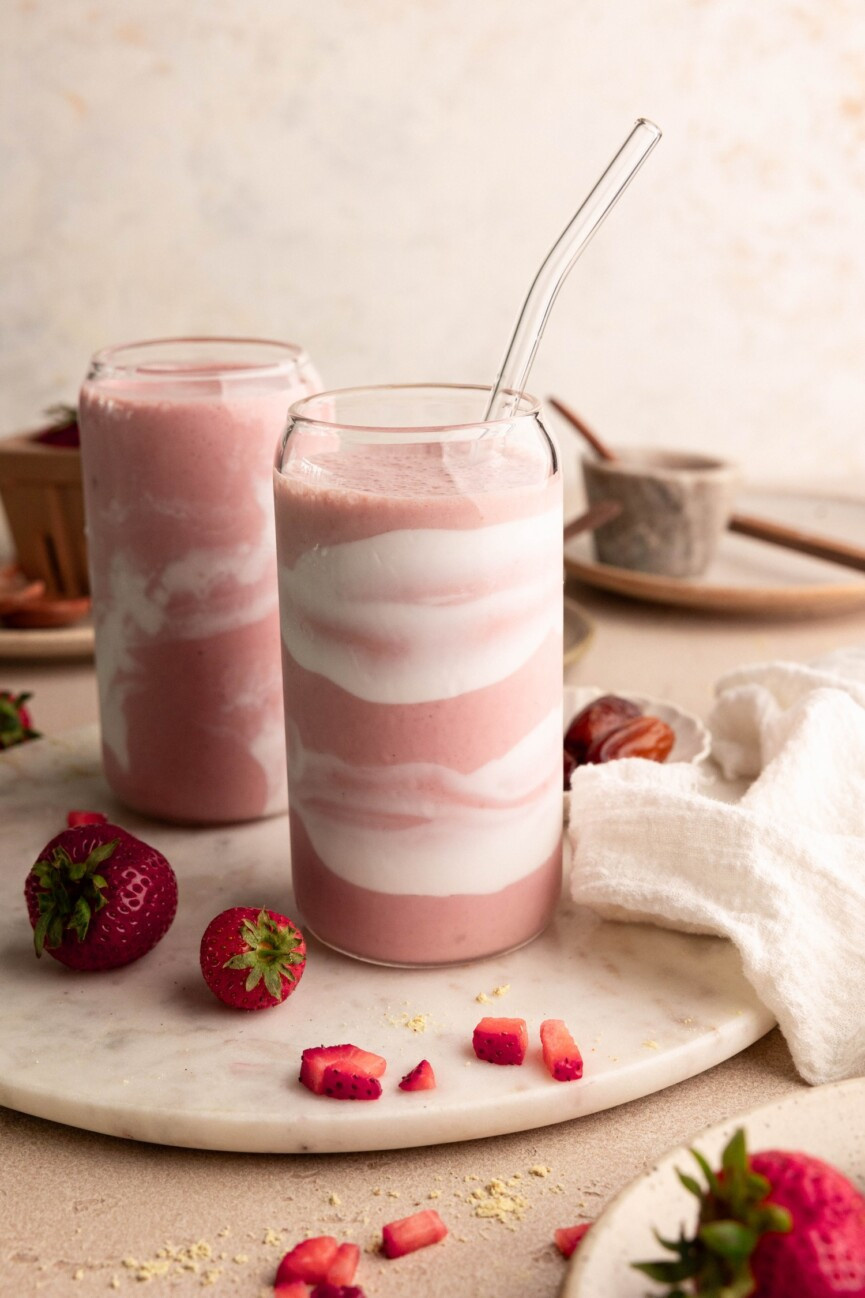
Here are a few high-protein, high-fiber smoothie recipes to try: 1. A strawberry smoothie with coconut yogurt, strawberries, and collagen for around 20 grams of protein and 7–9 grams of fiber. 2. A chocolate banana smoothie with Greek yogurt and chocolate protein powder, yielding 36–42 grams of protein and 7–10 grams of fiber. 3. A fig and tahini smoothie that offers 17–33 grams of protein and 11–14 grams of fiber, depending on the milk used. 4. A matcha banana smoothie with hemp seeds, providing approximately 26–31 grams of protein and 5–8 grams of fiber. 5. A cauliflower and banana smoothie that can be enhanced with protein powder to reach 31–43 grams of protein and 9–16 grams of fiber.
Smoothies can be tailored to individual preferences, but be mindful that substitutions can affect the overall nutritional content. For a high-protein smoothie without protein powder, consider using Greek yogurt, cottage cheese, or nut butters.
Ultimately, the goal is to create a smoothie that is not only nutritious but also enjoyable, making it a staple in your diet. By focusing on the right balance of ingredients, you can craft smoothies that satisfy your hunger and support your nutritional goals.