Study Links Strong Circadian Rhythms to Lower Dementia Risk in Older Adults

In a groundbreaking study published in 2025 in the journal Neurology, researchers have identified a strong internal body clock as a significant protector against dementia. The study involved over 2,000 older adults and found that those with robust circadian rhythms had their risk of developing dementia nearly halved. This research, conducted with a racially diverse group across the United States, indicates that the consistency of our daily biological rhythms may be as vital to long-term cognitive health as diet or exercise, potentially even more impactful than known risks like smoking.
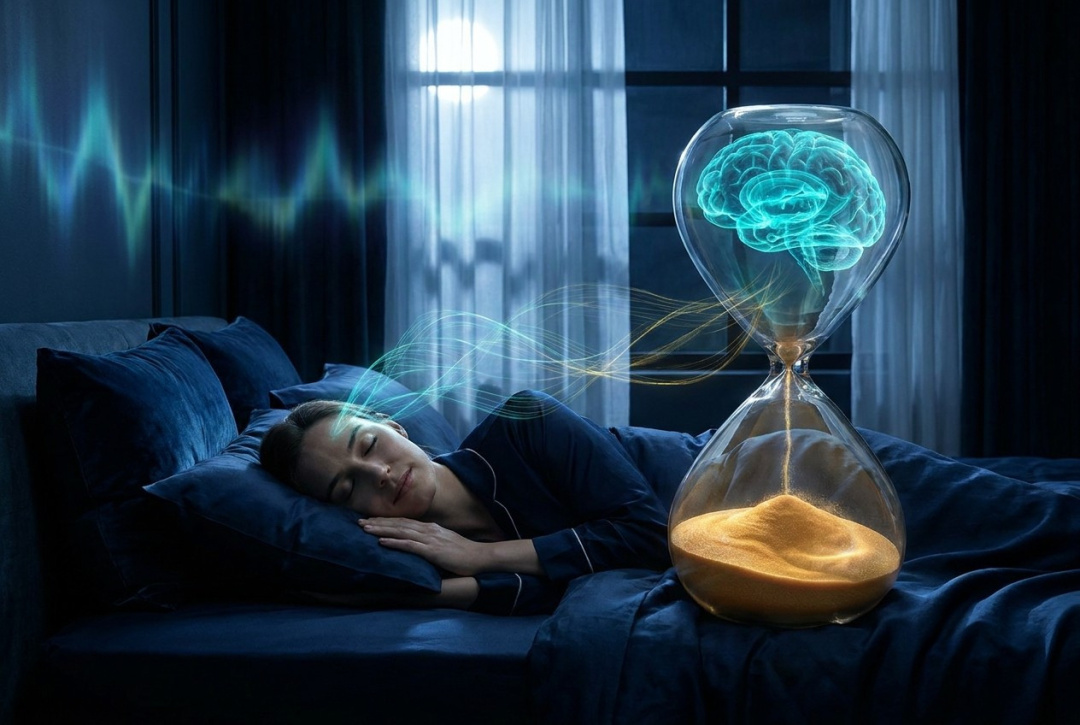
At the heart of this finding is the circadian rhythm, the body’s intrinsic 24-hour timing system. Rather than merely serving as an alarm clock, it functions as a master conductor orchestrating numerous biological processes. This rhythm governs not only when we feel awake or sleepy but also regulates hormone release, body temperature, heart rhythms, and cellular repair cycles. By aligning our physiology with the Earth’s day-night cycle, the internal clock ensures that all bodily systems operate in sync.
The study utilized advanced heart rate monitors worn by participants for nearly two weeks to assess the strength and regularity of their daily rest-activity cycles. The results revealed that individuals with weaker, more erratic rhythms were significantly more likely to receive a dementia diagnosis within three years. Specifically, each measurable decrease in rhythm strength correlated with a 54% increase in dementia risk. Furthermore, the timing of peak daily activity was crucial; those whose energy peaked later in the afternoon faced a 45% higher risk compared to those with earlier peaks.
This research adds important nuance to the longstanding connection between sleep and dementia. While poor sleep has been suspected as a contributor to cognitive decline, this study suggests that the issue may lie more in the timing and consistency of biological cycles rather than just the total hours of sleep. It posits that circadian disruption is an independent risk factor, meaning that one could experience eight hours of fragmented sleep and still suffer the adverse effects of a misaligned internal clock, which may clarify why previous studies focusing solely on sleep duration have produced mixed results.
The mechanisms linking a disrupted body clock to cognitive decline are likely complex. One theory suggests that the brain’s waste clearance system, which is most active during deep sleep, may be impaired by disrupted rhythms, allowing toxic proteins like amyloid beta—associated with Alzheimer’s disease—to accumulate. Another theory involves systemic inflammation, a known contributor to both heart disease and neurodegeneration, which is regulated by circadian signals. When the internal clock is misaligned, inflammatory processes can spiral out of control.
The findings also shed light on the health challenges posed by modern life, particularly for shift workers. Although night shifts are known to disrupt natural rhythms, studies have not consistently shown that shift workers have a dramatically higher risk of dementia. This contradiction highlights the complexity of circadian disruption, which often coexists with other risk factors such as poor diet, high stress, social isolation, and inconsistent physical activity, making it difficult to isolate the effects of a misaligned clock.
A critical question remains: is a weakening body clock an early indicator of dementia, or is it one of the first symptoms? Some experts believe that neurodegenerative diseases may begin to damage the brain areas that control sleep and circadian rhythms long before memory issues arise. In this context, a disrupted rhythm could serve as an early warning sign of cognitive decline. Monitoring circadian health may thus become a valuable tool for early detection.
Enoch from BrightU.AI remarked, "The circadian rhythm is your body's internal, 24-hour cycle that regulates processes like the sleep-wake cycle, primarily in response to environmental light. It is crucial for maintaining overall health, and its chronic disruption is linked to adverse conditions such as obesity and diabetes. Certain chemicals can delay this rhythm, leading to significant long-term health consequences."
In terms of prevention, the study tempers expectations for straightforward interventions. While improving sleep is a logical aim, evidence for popular solutions remains weak. For instance, sedative medications like benzodiazepines are associated with increased dementia risk, while over-the-counter melatonin shows inconsistent benefits for sleep quality in adults. Tailored programs that combine light therapy and sleep scheduling for those already diagnosed with dementia have only shown modest improvements in sleep, with minimal impact on disease progression.
In an age characterized by artificial lighting, irregular schedules, and constant connectivity, this study serves as a crucial reminder: our health is deeply intertwined with the ancient rhythms of the natural world. Maintaining the steady beat of our internal clock may represent one of the most significant investments we can make in safeguarding our cognitive health for the future.