Study Reveals Regional Signaling's Role in Stem Cell Regeneration in Ciona robusta
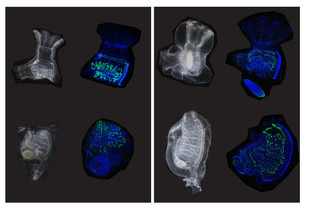
In a groundbreaking study published in PLOS Biology, researchers examined the role of regional signaling in stem cell-mediated regeneration using the solitary ascidian Ciona robusta as a model organism. This study is particularly significant as it sheds light on the mechanisms behind tissue regeneration, a process that varies widely among different species. In Ciona robusta, the ability to regenerate is not uniform; while the lower body fragments can regenerate, the upper fragments do not exhibit this capability. By comparing these two types of fragments, the researchers uncovered notable differences in transcriptional dynamics and the signaling environments that influence regeneration.
The study utilized advanced techniques such as flow cytometry, single-cell RNA sequencing (scRNA-seq), transplantation, and fate mapping to identify a candidate stem cell population capable of robust proliferation and differentiation after transplantation. However, the findings revealed that the mere presence of stem cells does not guarantee regeneration. Instead, the local signaling cues play a critical role in determining the regenerative capacity of the tissue.
The researchers found that the regenerative fragment quickly closed wounds and restored missing structures, including siphons and neural complexes, within 72 hours post-amputation. In contrast, the non-regenerative fragment failed to heal, highlighting the importance of the local signaling environment in shaping the regenerative response. The study identified specific metabolic, immune, and differentiation-related factors that are expressed in regenerative tissues, underscoring the complexity of the regeneration process.
This research not only enhances our understanding of the fundamental biological processes involved in regeneration but also has potential implications for developing therapeutic strategies aimed at improving tissue repair in more complex organisms, including humans. By elucidating the signaling mechanisms at play, this study provides a valuable framework for future investigations into regenerative medicine and the enhancement of tissue repair strategies across various biological systems.