Type 2 Diabetes Linked to Increased Risk of Pseudarthrosis After Endoscopic Lumbar Fusion
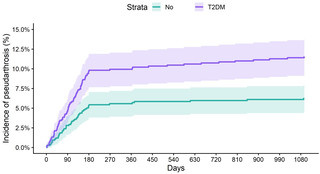
A recent retrospective cohort study has highlighted the association between type 2 diabetes mellitus (T2DM) and postoperative outcomes in patients undergoing single-level endoscopic lumbar interbody fusion (Endo-LIF). This study, utilizing data from the TriNetX Global Collaborative Network, examined adults who underwent the procedure from 2015 to 2025, revealing that T2DM is linked to a higher incidence of pseudarthrosis, a condition where the bone fails to heal properly after surgery.
The study included a total of 15,994 patients, with 782 identified as having T2DM after applying strict inclusion and exclusion criteria. After propensity score matching, 755 patients remained in each cohort for comparison. The primary outcome measured was the occurrence of pseudarthrosis within three years, defined by specific ICD-10 codes. Secondary outcomes included early complications and healthcare utilization within the first year post-surgery.
Findings indicated that pseudarthrosis was observed more frequently in patients with T2DM, with rates of 11.5% compared to 6.2% in those without diabetes by the 36-month mark. The Kaplan-Meier cumulative incidence estimates showed a significant difference, with a hazard ratio of 1.90, suggesting that T2DM patients are nearly twice as likely to experience this complication. Despite these findings, early complications and healthcare utilization rates were comparable between the two groups, indicating that while T2DM impacts long-term fusion success, it does not necessarily lead to increased short-term surgical risks.
The study underscores the importance of understanding how metabolic conditions like T2DM can influence surgical outcomes, particularly as the prevalence of both diabetes and spinal disorders continues to rise. These insights may help inform surgical decision-making and postoperative management strategies for patients with diabetes. However, the authors caution that the findings describe an association rather than a direct causal relationship, emphasizing the need for further research to clarify these dynamics.
This study contributes to the growing body of literature exploring the implications of metabolic health on surgical outcomes, highlighting the need for tailored approaches in managing patients with diabetes undergoing spinal surgery. It serves as a reminder of the complex interplay between systemic health conditions and surgical recovery, which is crucial for optimizing patient care in clinical settings.