Study Links Strong Chest and Back Muscles to Reduced Heart Attack Risk
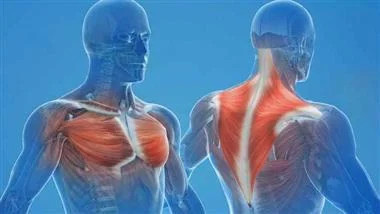
A recent study published in Radiology reveals that individuals with healthier chest and back muscles are significantly less likely to experience heart attacks and early death over the next ten years. This finding suggests that the quality of muscle tissue may serve as an important indicator of long-term cardiovascular health. The research emphasizes that muscle condition is more critical than size; muscles with less fat infiltrating their fibers are associated with better cardiovascular outcomes than merely having larger muscles.
The study found that strong chest and back muscles remained linked to a lower risk of heart attacks even after accounting for conventional risk factors such as age, sex, and calcium buildup in the arteries. This indicates that muscle quality provides valuable information that traditional heart risk markers may not fully capture.
Researchers analyzed coronary CT angiography scans from 1,722 adults, focusing not only on blocked arteries but also on the muscles, fat, bones, and organs visible in these scans. The results showed that the condition of the chest and back muscles was among the strongest predictors of future heart attacks and mortality over the next decade. Specifically, for every 10-unit increase in muscle density observed on the scans, the risk of a heart attack decreased by 31%, while the risk of death fell by 39%. Conversely, individuals with lower muscle quality faced an 85% higher risk of dying and a 58% higher risk of having a heart attack compared to those with healthier muscles.
The study challenges the common belief that muscle size is the primary determinant of health outcomes. Instead, it emphasizes that the internal composition of muscle—specifically, the amount of fat infiltrating the fibers—plays a crucial role in predicting heart health. This suggests that individuals do not need to aspire to bodybuilder physiques to improve their cardiovascular health.
The researchers recommend various forms of exercise that can enhance muscle quality, including resistance training, rowing, cycling, Pilates, and brisk walking. These activities can help strengthen the identified muscle groups without the need for extreme workouts. Additionally, building healthier muscles involves not just exercise but also adequate recovery and nutrition, including sufficient protein, collagen, and healthy carbohydrates to support muscle tissue and cardiovascular health.
In conclusion, the study highlights a meaningful connection between the condition of chest and back muscles and cardiovascular health, suggesting that muscle quality should be considered alongside traditional risk factors. While further research is needed to understand the exact mechanisms linking muscle quality to heart health, the findings underscore the importance of maintaining healthy muscle tissue as part of a comprehensive approach to heart health.