Study Links PFAS Exposure to Kidney Disease Outcomes via Genetic Analysis
Per- and polyfluoroalkyl substances (PFAS) are persistent environmental pollutants that have raised concerns regarding their potential impact on human health, particularly kidney health. A recent study integrated genetic epidemiology and computational toxicology to explore the associations between genetically predicted circulating levels of PFAS and kidney disease outcomes. The research focused on two specific PFAS compounds, perfluorooctanoic acid (PFOA) and perfluorooctane sulfonate (PFOS), examining their relationships with various kidney diseases such as IgA nephropathy, hypertensive nephropathy, and urinary tract infections.
The study found that genetically predicted higher levels of PFOA were inversely associated with IgA nephropathy, indicating a lower risk (odds ratio [OR] = 0.21, P = 0.004). Conversely, higher PFOA levels were positively associated with hypertensive nephropathy (OR = 1.20, P < 0.001) and kidney stones (OR = 1.24, P = 0.016). Similarly, higher PFOS levels showed an inverse association with IgA nephropathy (OR = 0.27, P = 0.046) and a positive association with urinary tract infections (OR = 0.94, P = 0.003). However, the association between PFOA and membranous nephropathy was not robust, as it did not hold up under further analysis.
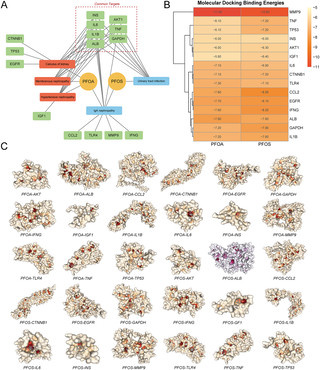
The researchers employed computational toxicology methods to prioritize candidate molecular targets and biological pathways that may be involved in the PFAS-kidney disease associations. They identified several key proteins and inflammatory pathways, including CTNNB1, TP53, and EGFR, which are implicated in kidney health. The study emphasizes the complexity of PFAS exposure and its potential effects on kidney disease, suggesting that further experimental validation is necessary to establish causal relationships.
Overall, this research provides a framework for future studies aimed at understanding the toxicogenomic pathways associated with PFAS and their impact on kidney health. The findings underscore the importance of addressing environmental exposures in the context of public health and metabolic health outcomes.