Study Compares Blood Test Trends and Abnormalities for Cancer Detection
In a recent retrospective cohort study published in PLOS Medicine, researchers led by Brian D. Nicholson examined the role of blood test trends in the assessment of cancer risk among patients presenting with unexpected weight loss (UWL). This study is particularly significant as UWL is often a non-specific symptom of cancer, making accurate diagnosis challenging in primary care settings. The research aimed to determine whether evaluating historical trends in blood test results could provide better discrimination for undiagnosed cancer compared to relying solely on the most recent blood test abnormalities.
The study analyzed data from the Clinical Practice Research Datalink, focusing on patients aged 18 and older who presented with UWL between January 1, 2000, and December 31, 2018. In total, 275,205 patients were included, with 5.0% diagnosed with cancer. The researchers assessed various blood tests, including those measuring inflammatory markers and other common indicators, to identify trends over periods of 1, 3, 5, and 10 years prior to the onset of UWL.
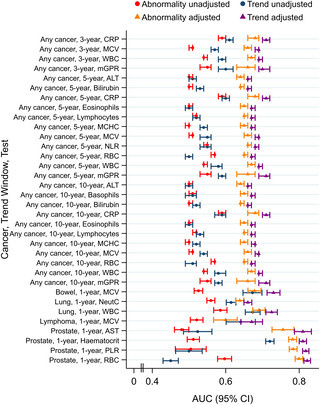
Key findings indicated that blood test trends, particularly when adjusted for age and sex, were more effective in identifying cancer risk than single abnormal results. The study reported an area under the curve (AUC) of 0.82 for trends, suggesting a strong predictive capability. Notably, the analysis revealed that certain trends, such as those in mean cell volume for bowel cancer and lymphomas, were particularly telling.
However, the study also acknowledged limitations, including potential biases in testing and the need for at least two tests to establish a trend. The authors emphasized that while blood test abnormalities are critical for cancer referral decisions, incorporating historical trends could enhance the diagnostic process, allowing for more timely investigations and interventions.
This research underscores the importance of a nuanced approach to interpreting blood test results in primary care, particularly for patients presenting with non-specific symptoms like UWL. By focusing on trends over time, healthcare providers may improve their ability to identify patients at risk for serious conditions, ultimately leading to better patient outcomes.