Study Reveals Impact of Cooking Methods on Nutritional Quality of Leafy Vegetables
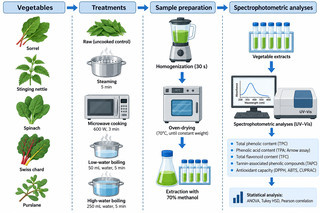
A recent study published in PLOS One examined the effects of four domestic cooking methods—steaming, microwaving, low-water boiling, and high-water boiling—on the phenolic composition and antioxidant capacities of five dark green leafy vegetables: sorrel, stinging nettle, spinach, Swiss chard, and purslane. The researchers quantified total phenolics, phenolic acids, flavonoids, and tannins using spectrophotometric methods, while antioxidant capacities were assessed through DPPH, ABTS, and CUPRAC assays. The results showed that cooking methods induced species- and method-dependent changes in the phenolic profiles of the vegetables. Notably, total phenolic content significantly decreased in sorrel, while other vegetables maintained stable or slightly increased values. Specifically, phenolic acids increased markedly in stinging nettle and purslane, particularly after low-water boiling and steaming. Conversely, flavonoid levels generally declined under high-water boiling but remained stable in purslane. Tannin-associated phenolic compounds decreased in nettle and sorrel during boiling, whereas purslane exhibited increases across several treatments. The study found that antioxidant capacities generally decreased with high-water boiling, while steaming and microwaving preserved or enhanced antioxidant activity in purslane. Strong correlations were observed between total phenolic content and antioxidant assays, highlighting the importance of cooking methods in preserving the nutritional quality of leafy vegetables. The study emphasizes the need for careful selection of cooking techniques to optimize the health benefits of these vegetables, which are recognized for their rich content of vitamins, minerals, dietary fiber, and bioactive compounds. Given the variability in cooking practices, the findings aim to inform dietary and culinary recommendations for maximizing the nutritional value of cooked leafy vegetables. This research contributes to the understanding of how cooking methods can impact the health-promoting properties of commonly consumed vegetables, particularly in regions where these foods are dietary staples.