Spiral Artery Remodeling's Impact on Shear Stress in Placental Villi
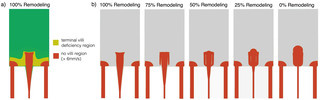
Proper placental development is crucial for a healthy pregnancy, relying on the remodeling of maternal uterine blood vessels to accommodate fetal needs while ensuring optimal conditions for biochemical exchange. Terminal villi, which are essential for feto-maternal nutrient and gas exchange, often show impaired development in pregnancies complicated by conditions such as intrauterine growth restriction and preeclampsia. These complications are linked to incomplete remodeling of spiral arteries, which can disrupt blood flow and affect the mechanical forces acting on placental villi. In a recent study, researchers investigated the relationship between spiral artery remodeling and wall shear stress (WSS) on placental villi, employing a novel multiscale computational framework to quantify these effects. The study found that incomplete remodeling leads to increased WSS, which could hinder the formation of terminal villi, thereby impacting overall placental health. The computational model developed in this research allows for the assessment of WSS across varying degrees of spiral artery remodeling, providing insights into how altered blood flow mechanics may contribute to abnormal placental development. The findings suggest that physiological shear stress thresholds are critical for maintaining healthy placental function and that further research is needed to explore the mechanobiology of trophoblast cells in relation to these mechanical forces. By establishing a connection between maternal hemodynamics and placental villi development, this study opens new avenues for understanding the complexities of placental health and its implications for pregnancy outcomes.














