Perris, California's Healthy Checkout Policy Increases Availability of Healthier Foods
In January 2024, Perris, California, implemented a mandatory healthy checkout policy, becoming the third jurisdiction globally to adopt such a measure. This policy aims to improve the healthfulness of the retail food environment by regulating the types of products displayed at checkout. Specifically, it permits only those foods and beverages that meet established nutrition standards within a six-foot radius of the register. This initiative follows similar policies in Berkeley, California, and England, which have shown positive outcomes in promoting healthier food choices.
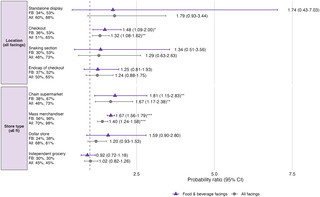
A recent study conducted by Huang and colleagues evaluated the effects of this policy by comparing data from 13 stores in Perris with 51 matched stores in three comparison cities that did not implement the policy. The researchers collected data on product availability at checkout before and after the policy's implementation, focusing on compliance with the healthy checkout ordinance (HCO) standards. Their analysis revealed a significant increase in compliance rates, with the percentage of compliant product facings rising from 50% to 67% in Perris stores, compared to a 37% increase in the comparison cities.
Among food and beverage items displayed within the six-foot zone, compliance increased from 36% to 55%, showcasing a 52% relative increase. Notably, there was a substantial rise in compliant beverages, with a 141% relative increase in healthier options. However, the study found no significant reductions in the presence of noncompliant items such as candy and sugary drinks, suggesting that while the policy improved healthier food visibility, it did not eliminate unhealthy options.
The findings indicate that mandatory healthy checkout policies can effectively enhance the availability of healthier food options at checkout areas, which may positively influence consumer choices. However, the study also highlights the importance of policy design, as the impact varied depending on the specific regulations and scope of the ordinance. As jurisdictions consider implementing similar policies, careful attention to the details of policy design and nutrition standards will be crucial for maximizing their effectiveness in promoting healthier food environments.