Study Reveals RNA Activity in Neurons During Herpes Simplex Virus 1 Latency
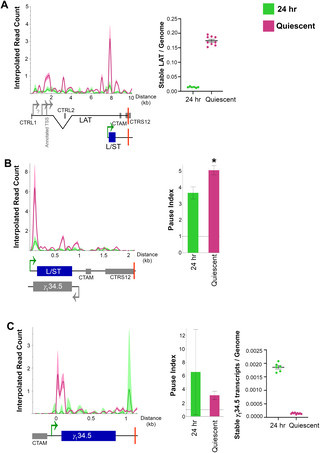
A recent study published in PLOS Pathogens has provided new insights into the behavior of herpes simplex virus 1 (HSV-1) during latency in human neurons. Researchers utilized precision nuclear run-on sequencing (PRO-seq) alongside quantitative RT-qPCR to analyze RNA levels in differentiated LUHMES neurons before and after infection with HSV-1. The study found that during the acute phase of infection, transcription and viral genome replication were notably slower in LUHMES neurons compared to undifferentiated epithelial cells, which typically show robust viral activity. Interestingly, the latent phase was characterized by high transcriptional activity on viral genes, despite low levels of viral RNA. This suggests that while the initiation of transcription occurs, factors affecting RNA polymerase processivity may limit the accumulation of viral transcripts, thus contributing to the maintenance of latency. The findings indicate that HSV-1 latency is more transcriptionally active than previously understood, with implications for understanding the virus's persistence in human populations. The study highlights the complex interplay between viral transcription and host cellular mechanisms, emphasizing the need for further research into the regulatory processes governing HSV-1 latency. The research also underscores the importance of understanding how viral infections can influence neuronal function and health, which is relevant to metabolic health considerations. By mapping the transcriptional dynamics of HSV-1 in neurons, this study contributes to a broader understanding of viral latency and its implications for human health, particularly in relation to neurological conditions and metabolic processes.