Dr. Soumya Swaminathan Highlights Nutrition as a Vital Public Health Vaccine
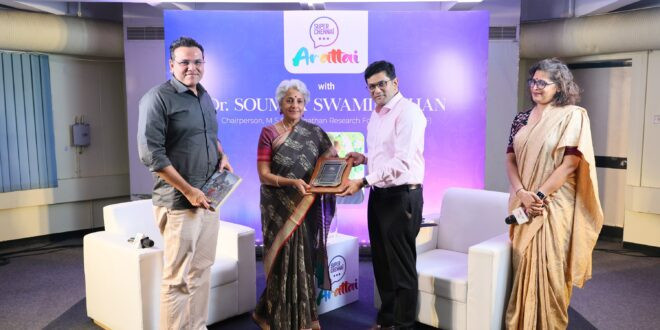
In June 2026, Dr. Soumya Swaminathan, an internationally recognized public health leader and Chairperson of the M.S. Swaminathan Research Foundation, delivered a compelling message at the Super Chennai Arattaiseries, asserting that "nutrition is the best vaccine." This statement encapsulates her decades of research and policy experience, particularly in the context of India's fight against tuberculosis. Dr. Swaminathan's work has illustrated how nutrition significantly impacts health outcomes and shapes global public health policy.
As she reflected on her journey from a young researcher to a prominent figure in global health, Dr. Swaminathan highlighted the pivotal role Chennai has played in her development. Her early experiences at the National Institute for Research in Tuberculosis, where she treated patients, informed her understanding of the social determinants of health. She noted that factors such as poverty, food insecurity, and poor living conditions often have a greater influence on health outcomes than clinical treatments alone.
Dr. Swaminathan shared findings from a landmark study conducted among tribal communities, which demonstrated that providing nutritious food to tuberculosis patients and their families not only improved recovery rates but also reduced TB transmission within households by nearly 50 percent. This research has since guided global recommendations from the World Health Organization regarding nutrition in tuberculosis care.
In her address, Dr. Swaminathan emphasized the importance of grounding global health recommendations in local realities. She stated, "Much of what I learned about science and public health came from listening to communities. Chennai has been central to that journey not just because of its institutions, but because it taught me that meaningful research begins in the field."
The conversation also touched on the future of healthcare, climate resilience, and urban development. Dr. Swaminathan advocated for increased investment in primary healthcare, suggesting that well-equipped neighborhood clinics could significantly reduce out-of-pocket medical expenses while enhancing preventive care. She also stressed the need for evidence-driven adoption of technology, particularly artificial intelligence, to improve health outcomes rather than merely serving as a goal in itself.
Looking ahead, Dr. Swaminathan called for greater citizen engagement in environmental monitoring initiatives, such as tracking water quality and air pollution. She argued that healthier cities depend on cleaner environments and active community participation.
Mr. Ranjeeth Rathod, Managing Director of Super Chennai, praised Dr. Swaminathan's contributions, stating that her journey exemplifies the potential for Chennai to nurture leaders who impact lives globally. The event concluded with an interactive session where attendees, including students and healthcare professionals, engaged in discussions about the future of public health, nutrition, and sustainable development, reaffirming Chennai's role as a hub for scientific research and community engagement.