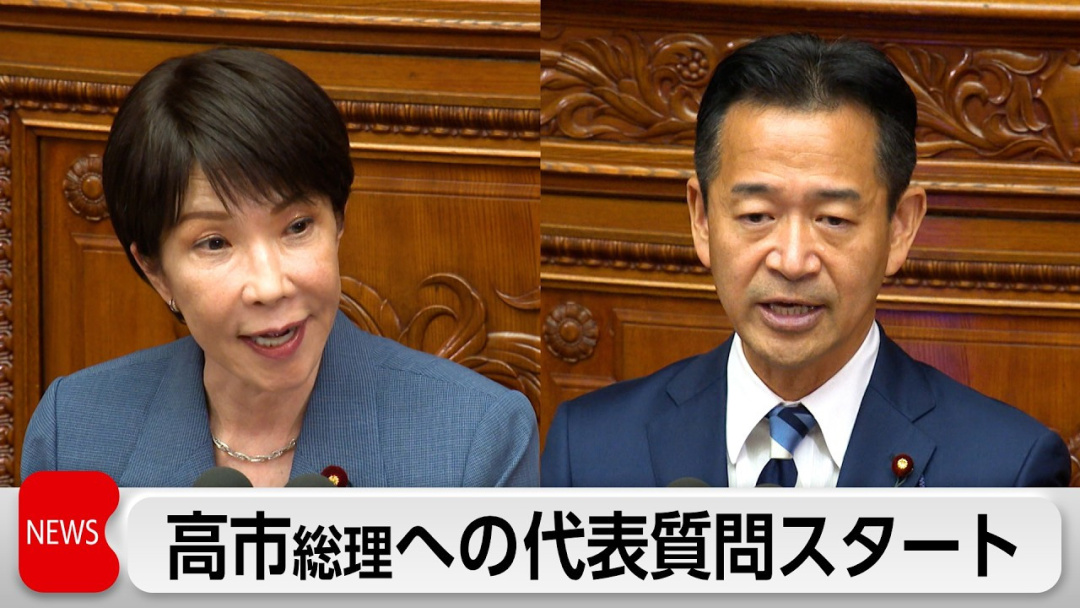
Japan's Government Proposes Food-Tax Relief Amid Funding Concerns
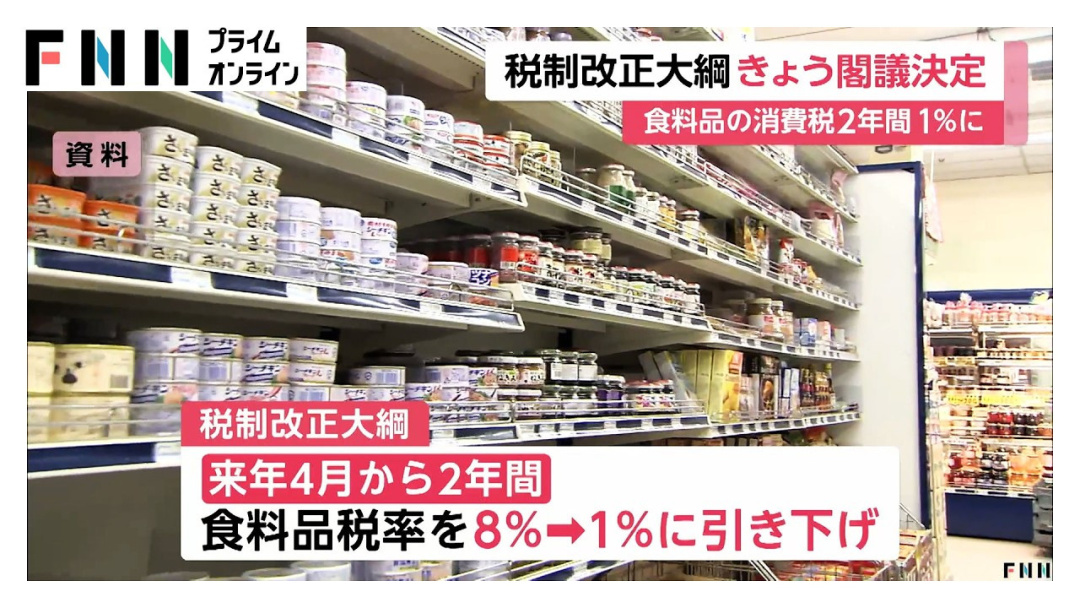
On September 15, Japan's Prime Minister Sanae Takaichi's government entered a critical political week by approving an outline for food-tax relief and household payouts. This plan aims to address voter frustration over rising food prices, proposing to reduce the consumption tax on food from 8% to 1% for two years beginning in April 2027. Additionally, the government plans to provide further payouts to effectively eliminate the remaining tax burden on households during this period. However, the lack of a clear funding strategy for this initiative has raised significant fiscal concerns, especially as the Bank of Japan (BOJ) approaches an important decision regarding interest rates.
The proposed tax cut is expected to create a revenue shortfall of approximately 5 trillion yen. Finance Minister Satsuki Katayama has stated that the government will not resort to deficit-financing bonds and remains committed to reducing Japan's debt-to-GDP ratio. Despite this commitment, the outline approved by the cabinet does not include a detailed funding structure, which means that while the government has preserved its promise to voters, it has postponed addressing the most challenging fiscal questions.
This funding gap is particularly concerning given the current stress in bond markets. Japan's 10-year government bond yield has recently surged to a 30-year high of around 3.025%, reflecting market apprehension regarding inflation, potential BOJ rate hikes, and the government's ability to finance tax relief and other spending initiatives without compromising fiscal credibility.
In response to these challenges, Takaichi has attempted to reassure investors by stating that the fiscal 2027 budget will aim to limit new government bond issuance to approximately 40 trillion yen. This pledge is intended to demonstrate that her administration is not abandoning fiscal discipline while pursuing what she describes as a responsible active fiscal policy. However, investors are likely to scrutinize this cap against actual spending needs rather than political assurances alone.
The pressure on the budget is mounting from multiple fronts. As the government prepares for the food-tax cut, various ministries are advocating for substantial fiscal appropriations for 2027, defense spending is on the rise, and Takaichi continues to promote a public-private investment roadmap worth 370 trillion yen through fiscal 2040. This roadmap focuses on strategic sectors such as artificial intelligence, semiconductors, shipbuilding, energy, space, quantum technology, and advanced manufacturing.
The rationale behind this strategy is clear: Takaichi aims to demonstrate that Japan can provide immediate relief to households while simultaneously strengthening the nation for the future. However, the events of September 15 highlighted the difficulties in achieving this balance. A tax cut without a funding plan may only partially reassure voters while providing markets with further reasons to question the overall fiscal trajectory.
The BOJ's upcoming meeting on September 17 and 18 is set to be a critical test. Markets are closely watching whether the central bank will raise the policy rate from 1% to 1.25%. The recent appreciation of the yen, which reached a seven-month high of 152.89 to the dollar, has been partly driven by expectations of accelerated rate hikes by the BOJ. However, analysts caution that these expectations may be overly optimistic, particularly if the BOJ does not signal a clear path toward a higher terminal rate or a more aggressive tightening approach.
For Takaichi, a stronger yen could help mitigate import-driven inflation by reducing costs for food, fuel, and raw materials. However, higher interest rates would increase government borrowing costs, complicating the financing of the tax cut, defense spending, and investment initiatives. This situation presents a dual-edged sword: while the government benefits from a stronger yen, it must also contend with the tighter financial conditions that accompany such a recovery.
The BOJ faces a communication challenge as well. If it opts to raise rates, it must frame the decision as a response to inflation and financial conditions rather than as a reaction to political pressure. Conversely, if it maintains current rates or adopts a cautious stance, the yen's recent gains could reverse, reigniting concerns over import prices and household inflation.
The relationship between the government and the BOJ remains delicate, particularly in light of previous worries that Takaichi might seek monetary policy support for her growth agenda. While the administration has asserted that specific monetary tools are the purview of the central bank, the combination of substantial spending promises, a tax cut, and rising bond yields keeps the question of independence at the forefront.
In summary, the political landscape as of September 15 reveals a complex interplay of fiscal promises and economic realities. The proposed food-tax relief plan aims to provide immediate support to households but leaves unresolved questions about funding. The BOJ's upcoming decisions will be pivotal in determining whether the government can maintain a credible fiscal path while addressing the needs of its citizens.