Marine Bacteria Collaborate to Degrade Fucoidan, Influencing Ocean Carbon Storage
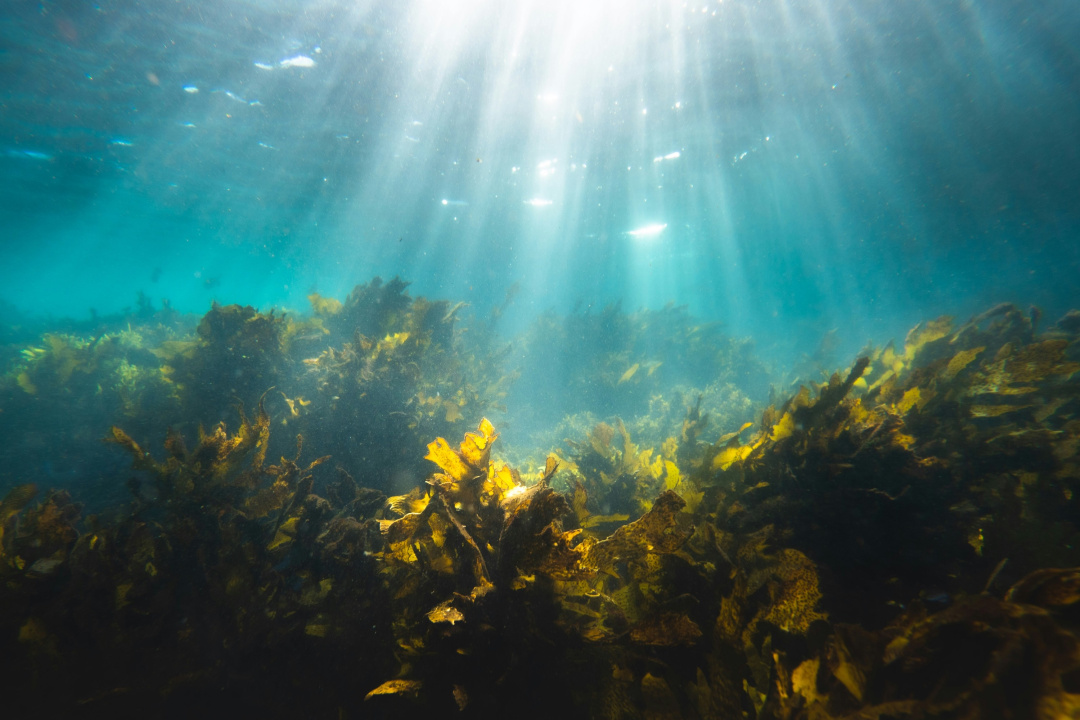
Deep in the ocean, brown algae and diatoms produce fucoidan, a complex carbohydrate that serves as a protective layer for these organisms. This molecule is notoriously difficult for microbes to decompose due to its intricate chemical structure, which varies among different algae species. This resistance to degradation allows fucoidan to sink into the ocean, effectively sequestering carbon for extended periods, thereby playing a significant role in the ocean’s carbon cycle.
For years, scientists have identified individual bacteria capable of breaking down segments of fucoidan, but a critical question remained: could a community of microbes completely degrade this complex molecule, and if so, how would they do it?
A recent open-access study published in Nature, led by Andreas Sichert from ETH Zurich and Otto X. Cordero, an associate professor at MIT, sheds light on this question. Cordero states, "No single bacterium can finish the job. Instead, fucoidan is degraded through teamwork. Different bacterial strains specialize in different parts of the molecule, and together, their combined efforts get the job done far more efficiently than any one organism could manage alone."
To explore how fucoidan is broken down in natural settings, the research team enriched a bacterial community from coastal seawater samples known for degrading fucoidan. Their findings were remarkable: they identified over 453 distinct genes responsible for producing enzymes that act on fucoidan across eight isolated bacterial strains. Alone, none of these strains could fully decompose the molecule, but when combined, they exhibited synergistic effects that surpassed the sum of their individual activities.
The researchers employed a rapid mass-spectrometry method to track how bacteria consumed the sugar building blocks of fucoidan. They discovered that the genetic complexity could be simplified into two functional roles: some bacterial strains focused on degrading the fucose-rich backbone of fucoidan, while others targeted the side branches, which contain less common sugars like xylose and galactose. When these complementary strains were combined, the degradation process became more efficient, indicating that the bacteria's collaborative efforts were more effective than anticipated.
Cordero emphasizes that the breakdown of one of the ocean's most abundant carbon pools relies on a division of labor, not among specific strains, but among functional roles. This division of labor made the degradation process more predictable than the complexity of the system would suggest.
The researchers developed a model that categorized bacterial activity into two main types: fucose and the rarer sugars from fucoidan's side chains. This model was trained using data from small communities with one to three bacterial strains and was able to predict degradation in communities with up to seven strains, extending its applicability to nine different types of fucoidans from various algae.
The implications of this research extend beyond microbiology. The concept of "diversity-limited degradation" suggests that the absence of the right combination of bacterial specialists can lead to prolonged persistence of fucoidan in the ocean, contributing to long-term carbon storage.
From a biotechnological perspective, the findings suggest that instead of engineering a single superbug to digest complex biomass, it may be more effective to assemble teams of microbes that specialize in complementary tasks. This approach could be utilized to process brown algal biomass and other complex polysaccharides on a larger scale.
Overall, the study highlights the potential for simplifying complex biological systems to better understand and predict microbial community functions. Cordero concludes, "When biology looks intractable, it may be that we haven't found the right level of description yet."
The research team included co-authors from ETH Zurich, the University of Vienna, and the Tata Institute of Fundamental Research, and was supported by the Simons Foundation through the Principles of Microbial Ecosystems (PRIME) collaboration.