Impact of Sustained Hypoxia on Cardiac Metabolic and Immune Adaptation
Chronic hypoxia is recognized as a significant factor in cardiovascular disease, yet the underlying molecular mechanisms of cardiac adaptation to prolonged hypoxic stress remain inadequately understood. A recent study utilized three datasets from the Gene Expression Omnibus (GEO) to perform a comparative transcriptomic analysis across different hypoxia exposure paradigms: sustained hypoxia, prenatal hypoxia, and adult subacute hypoxia. This analysis employed methods such as DESeq2, Pearson correlation analysis, and KEGG pathway enrichment, with permutation testing validating the robustness of the findings.
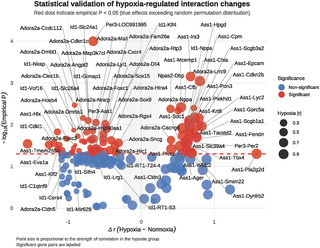
The study identified 181 differentially expressed genes (DEGs) associated with sustained hypoxia, contrasting with only 2 DEGs for prenatal hypoxia and 67 for adult subacute hypoxia, with no overlap among these groups. Notably, eight circadian DEGs were identified in the sustained hypoxia group, while seven distinct circadian DEGs were found in the prenatal adult programmed heart group, indicating a lack of overlap between the two sets. The circadian interactome underwent significant remodeling, with a 67.5% reduction in gene pairs, illustrating three adaptive patterns: enhanced synchronicity, interaction reversal, and weakened synchronicity. In this context, ASS1 emerged as a key co-expression hub under hypoxic conditions, showing a substantial increase in correlation compared to normoxic conditions.
Pathway analysis revealed divergent enrichment profiles, with 55 KEGG pathways linked to metabolic-immune systems and only 3 pathways associated with circadian genes, again with no overlap. Further analyses of disease and drug targets supported these divergent profiles, suggesting that the metabolic-immune adaptation system and circadian regulatory system exhibit distinct response patterns under sustained hypoxia.
The findings underscore the importance of understanding the interplay between metabolic and immune responses in the heart under chronic hypoxic conditions. This research not only identifies ASS1 as a significant transcript-level co-expression hub within the circadian interaction network but also highlights the potential for developing therapeutic strategies targeting chronic hypoxia-associated cardiovascular diseases. The study's insights could be particularly relevant for populations exposed to high-altitude environments, where hypoxia is a common challenge.